Drywall Repair in Mount Vernon and Nearby Towns
We repair, hang and finish drywall in homes across Mount Vernon and the towns around it. Every job starts the same way: we check what's behind the damage, contain the dust, and keep your family and pets clear of the work area until it's done.
The Towns We Work In
Most of our work is in Mount Vernon, and we take drywall and ceiling repair jobs in Pelham, Pelham Manor, Bronxville and Eastchester, plus New Rochelle and Mamaroneck to the east. To the south and west we cover the Bronx, Yonkers, Greenville and Hastings-on-Hudson. If your address falls between those, ask when you call and we'll tell you plainly whether it's in range.
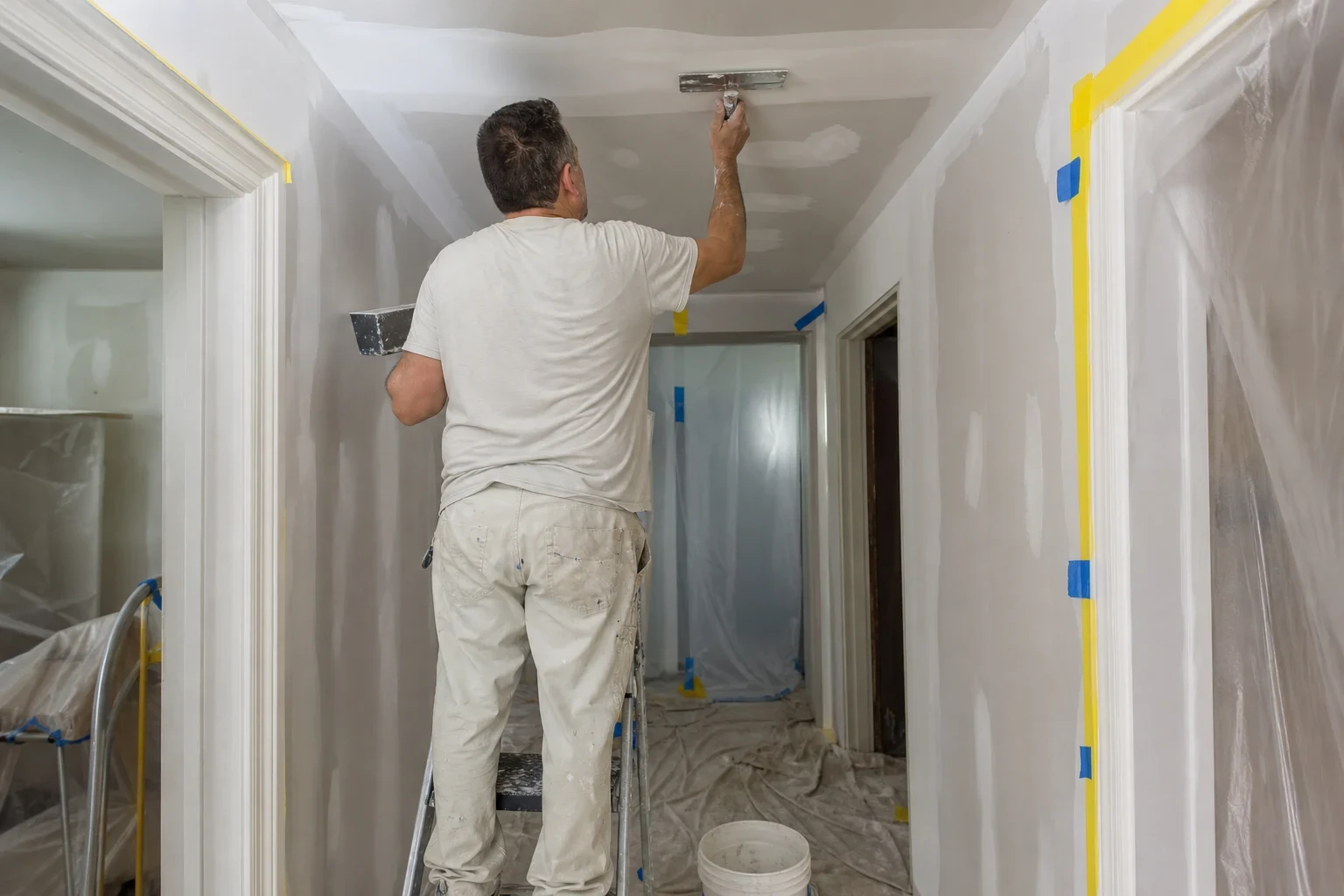
The way we work is the same in every town. Before cutting into a wall we locate wiring, water lines and ductwork with a stud finder and a small inspection hole, so a saw never goes blind into a cavity. We hang plastic sheeting with zip doors, cover floors, and run sanding through a vacuum so fine gypsum dust stays out of the rest of your home. Tools, screws and offcuts are picked up at the end of each day, not left where a child or pet can find them.
Towns we cover from Mount Vernon
- Mount Vernon
- Pelham
- Bronxville
- Pelham Manor
- Bronx
- Yonkers
- New Rochelle
- Eastchester
- Mamaroneck
- Greenville
- Hastings-on-Hudson
Not on the list? Call (914) 685-8593 and ask.
What We See in Homes Around Here
- Older homes and plaster walls
- A lot of the housing in southern Westchester and the Bronx was built before World War II. Many of those walls are plaster over wood or metal lath, not drywall. Patching them takes different steps: we secure loose plaster, cut back to sound edges, and bond the new material so the seam doesn't crack again later.
- Lead paint and old joint compound
- Homes painted before 1978 may have lead paint under newer coats, and some older joint compound and textured ceilings contain asbestos. Before sanding or demolition in an older house, we talk with you about testing. If a surface tests positive or can't be ruled out, we stop and tell you instead of grinding it into the air your family breathes.
- Seasonal movement
- Humid summers and dry, radiator-heated winters make wood framing swell and shrink every year. That shows up as nail pops, cracked tape at inside corners and hairline cracks running off door and window corners. We refasten with drywall screws, re-tape with the right tape for the joint, and explain which cracks are seasonal and which deserve a closer look.
- Water-damaged ceilings
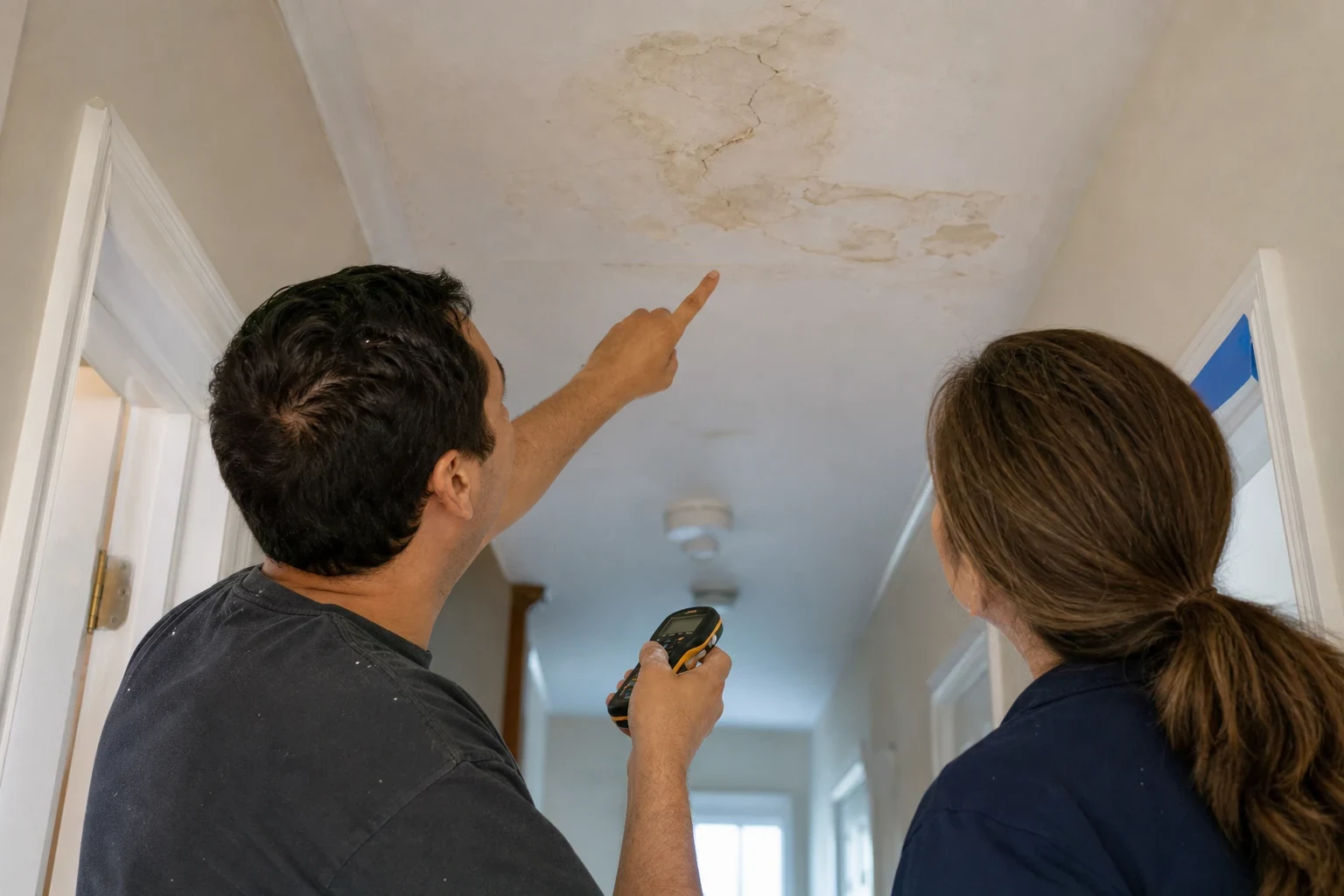
- Ceilings under bathrooms and on top floors take the most water damage. Wet gypsum loses strength and a saturated ceiling can sag and drop with little warning, so we check moisture with a meter, support or remove soaked board, and won't close a cavity until it reads dry.
- Permits and building rules
- Patching and replacing drywall usually doesn't need a permit, but work that moves framing or touches electrical can, and the rules differ between the city and the towns around it. Apartment buildings and co-ops often set their own work hours and paperwork. We check what applies to your job and work within it.
Tell Us Where the Damage Is
Give us your town and a short description of the wall or ceiling. We'll ask the questions that matter for safety, like the age of the house and whether there's been water, then set a time to come look.