ServicesDrywall Repair
Drywall Repair in Mount Vernon, NY
We repair damaged drywall where the damage starts: wet board, popped fasteners, failed tape joints and cracked corners. Before we cut, we check what runs behind the wall, and we seal the room so the dust stays put. Then we rebuild the surface flat and ready for paint.
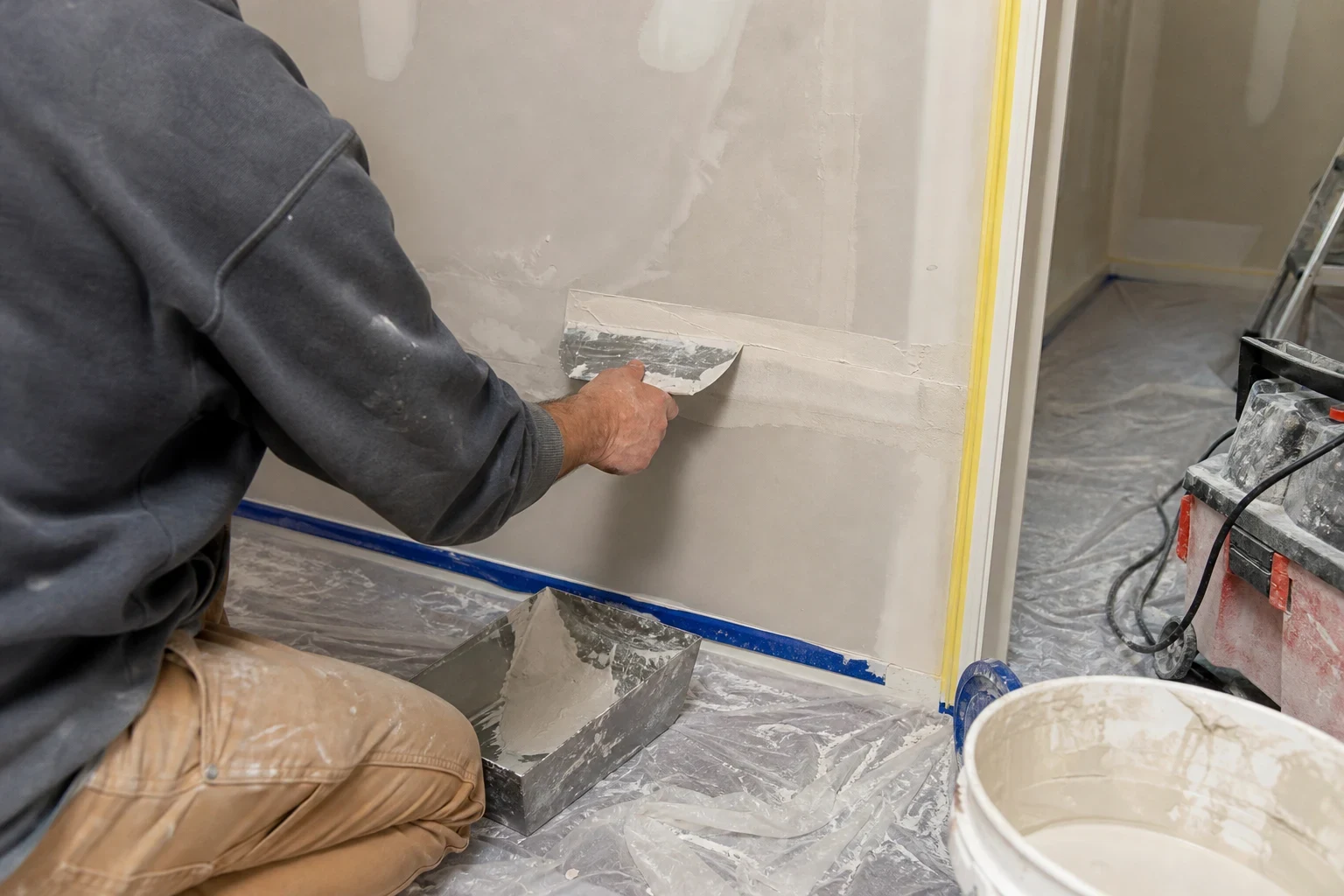
What drywall repair covers, and when it is the right call
Drywall repair is the fix for damage that goes deeper than a dent. Gypsum board is soft chalk between two paper faces. Once water soaks it, a doorknob breaks the core, or the framing behind it shifts, the paper and core stop holding together. Filling over that kind of damage gives you a patch that cracks or bulges again within a season.
So we cut back to sound material, fasten new board to the framing, and tape and finish the joints properly. For a single small hole, our drywall patching service is usually enough. When the damage is overhead, ceiling repair handles the extra weight and sag issues that come with it.
Safe work is built into every step. Many houses around Mount Vernon were built before 1980, when some joint compounds and paints could contain asbestos or lead. We ask about the age of your home, treat older surfaces with care, and keep cutting and sanding contained so fine gypsum dust does not settle through the house.
What the repair includes
- Moisture readings before anything is closed
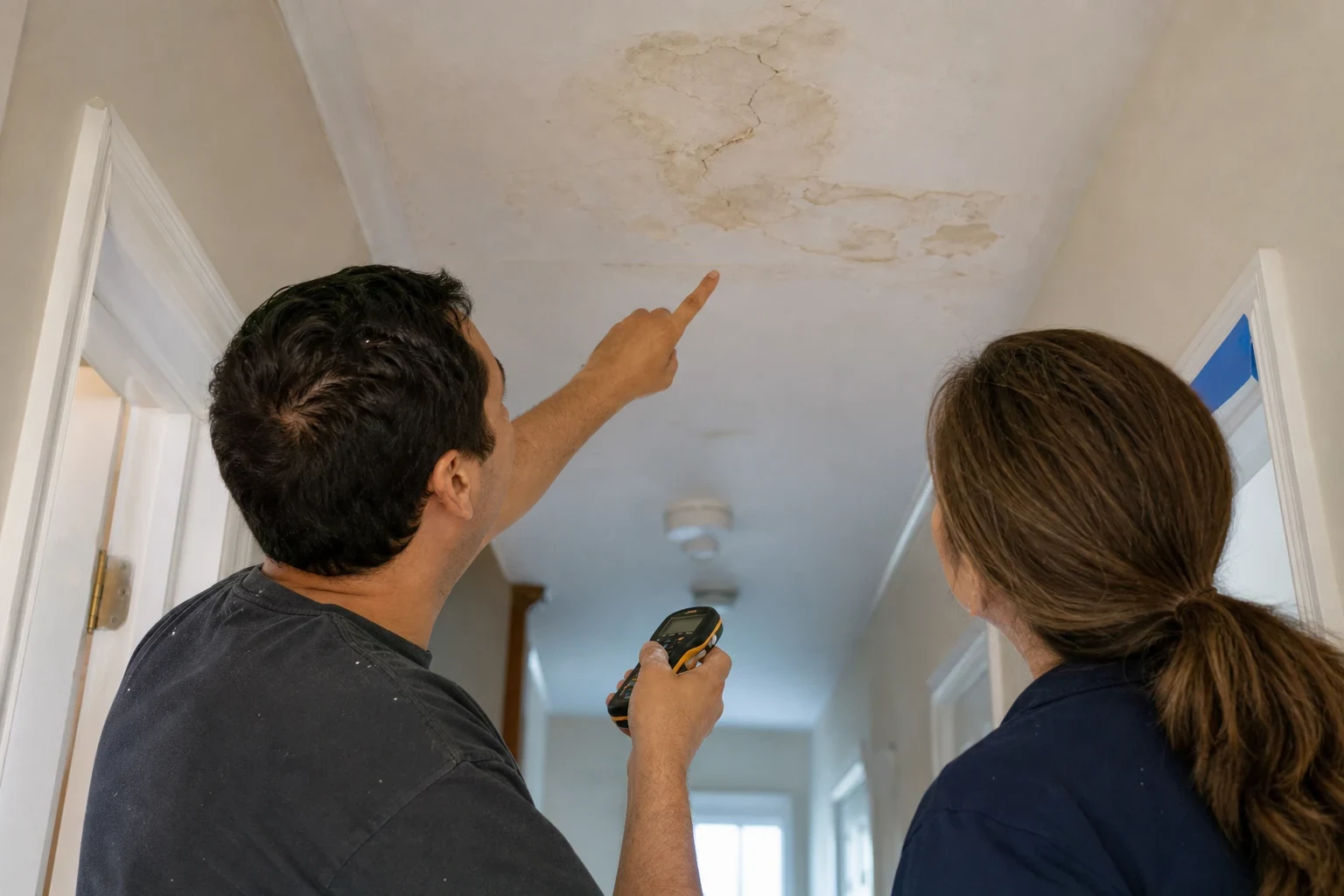
- We check damp areas with a moisture meter. Board that reads wet gets cut out, not painted over, because wet gypsum loses strength and can grow mold on the paper face. If a leak is still active, it needs to be fixed by the right trade before we close the wall.
- Checking behind the wall before cutting
- We locate studs, wiring and water lines before a saw touches the board. Near outlets and switches we shut off the circuit at the panel first. Cuts stay shallow so we do not nick anything behind the drywall.
- New board matched to what is there
- Most walls take 1/2-inch board. Ceilings and walls next to an attached garage often use 5/8-inch Type X, which is fire-rated, and we replace like with like. We add wood backing where the old edge has nothing solid to screw into.
- Taping with the right compound
- We embed paper tape in setting-type compound for the first coat on repairs. It cures by chemical reaction, shrinks less and resists cracking better than premixed mud alone. Finish coats go on in lighter all-purpose compound, feathered wide so the repair disappears.
- Dust control and cleanup
- Floors get covered, doorways get plastic sheeting, and we run a HEPA vacuum during sanding. When we leave, the work area is vacuumed and wiped down.
Signs your drywall needs repair, not just filler
Soft spots or bubbling paint
Press gently near a stain. If the board gives or the paint has blistered, the gypsum core has absorbed water and will not hold a patch.
Brown rings or yellow stains
These mark where water dried inside the board. The stain bleeds through ordinary paint, and the board under it may be weak.
Nail pops in a line
Small round bumps along a stud line mean fasteners have backed out as framing dried or shifted. Each one needs to be reset with screws and refinished.
Cracks from door and window corners
Diagonal cracks at corners point to movement or a failed joint. Taping over the crack alone rarely lasts, so we cut out and re-tape the joint.
Loose tape or bulging seams
Tape that lifts in strips usually was set in too little compound or got wet. It has to come off before the seam can be rebuilt.
What moves the cost of drywall repair
We price each job after seeing it, and we explain the quote by phone or on site in plain line items. The size of the hole matters less than what caused it and what sits behind it. Here is what changes the number.
Cause and extent of damage
A dry impact hole is a small job. Water damage often spreads past the visible stain, and every wet section has to come out.
Wall or ceiling
Overhead work needs more setup, two people for full sheets, and more care to keep dust off the room below.
Age of the home and wall type
Plaster-and-lath walls or older finishes that need careful handling take more time than modern drywall.
Finish level and texture
A smooth wall in strong window light needs more coats and sanding than a closet. Texture matching on a ceiling adds a step. Final color work is quoted separately under paint touch-ups.
How a repair day runs
- 1
Phone conversation and visit
You tell us what you see and roughly how old the house is. We schedule a visit, look at the damage, take moisture readings and explain what needs to be cut out and why.
- 2
Set up a contained work area
We cover floors and furniture, hang plastic at doorways, and shut off any circuit near the cut. If kids or pets are home, we ask that they stay out of the room until we finish.
- 3
Cut out and replace the board
Damaged drywall is removed back to the framing or to solid board. New pieces are screwed in, with backing added where needed, and the joints get their first coat of setting compound and tape.
- 4
Finish coats and sanding
Two or three thinner coats follow, with drying time between them, so most repairs take more than one visit. We sand with dust extraction, check the surface under raking light, and prime it ready for paint.
Drywall repair questions
Can you just patch over a water stain?
Only if the board is fully dry and still firm, which we confirm with a moisture meter. Even then, the stain needs a stain-blocking primer or it will show through new paint. If the board is soft or reads wet, we cut it out and replace it.
Is the dust going to spread through my house?
Gypsum dust is very fine, so we plan for it. We seal doorways with plastic, cover floors, and sand with a HEPA vacuum attached. Small repairs can often be finished with sanding sponges, which make very little dust.
My house is old. Is cutting into the walls safe?
Homes built before 1980 can have joint compound or paint containing asbestos or lead. We ask about the age of the house up front and talk through how the surface should be handled before we cut. If testing makes sense, we tell you before any work starts.
How long does a drywall repair take?
Most repairs need two or three visits, because each coat of compound has to dry before the next. Setting compound speeds up the first coat, but finish coats still need time. We give you the schedule when we quote the job.
Will I be able to see where the repair was?
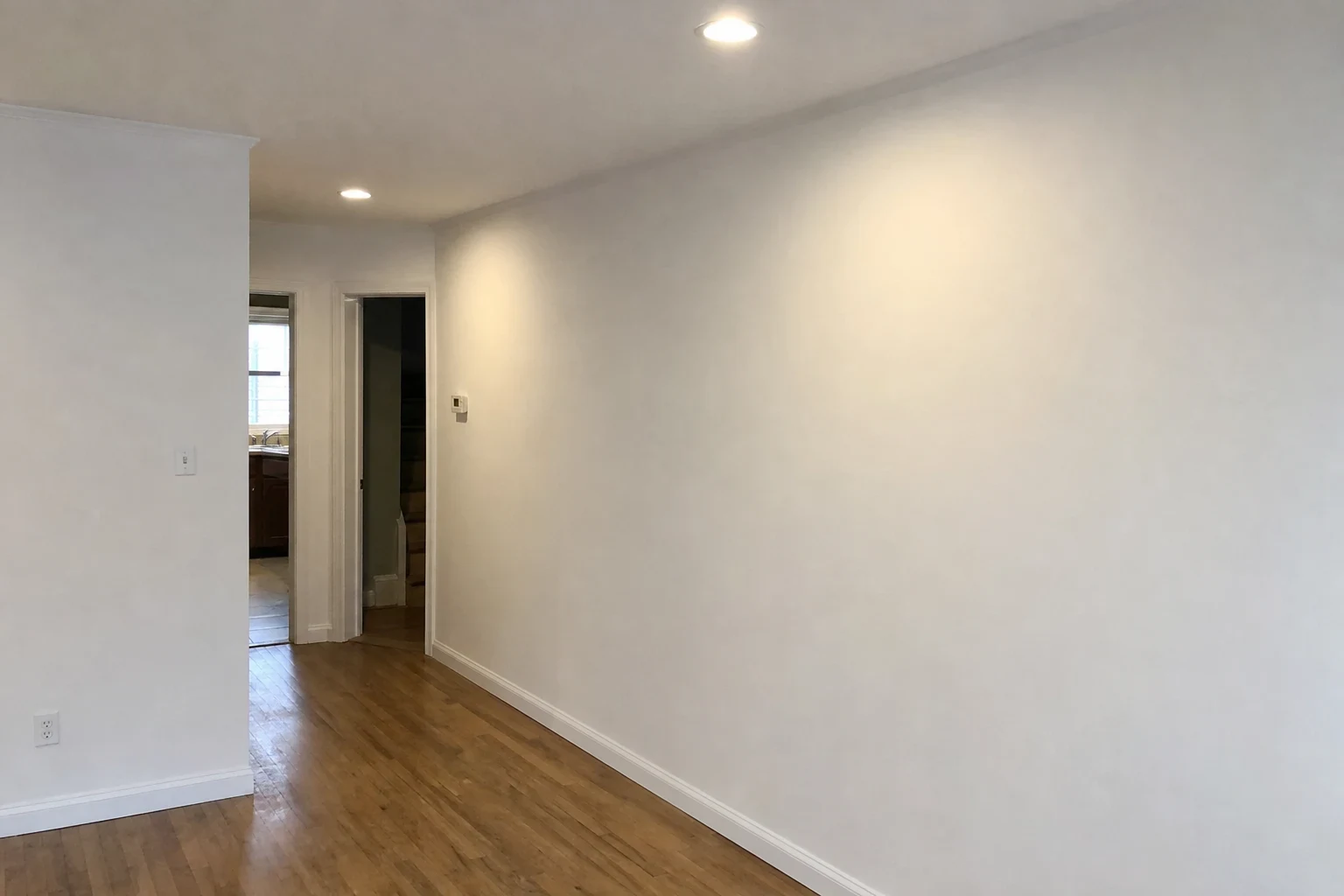
The goal is that you cannot. We feather each coat wide past the repair, sand it flat, and check it under a work light at a low angle. Once primed and painted to match, it should blend into the wall.
Get damaged drywall fixed the right way
Tell us what the wall or ceiling looks like and how old the house is. We will explain what the repair involves and set up a visit to see it.