ServicesCeiling Repair
Ceiling Repair in Mount Vernon
We repair water-stained, cracked and sagging ceilings in your home. We confirm the board is dry and the framing is sound, cut out what has failed, and rebuild the ceiling with matched texture. Every job starts with a sealed, clean work area and nobody standing under loose material.
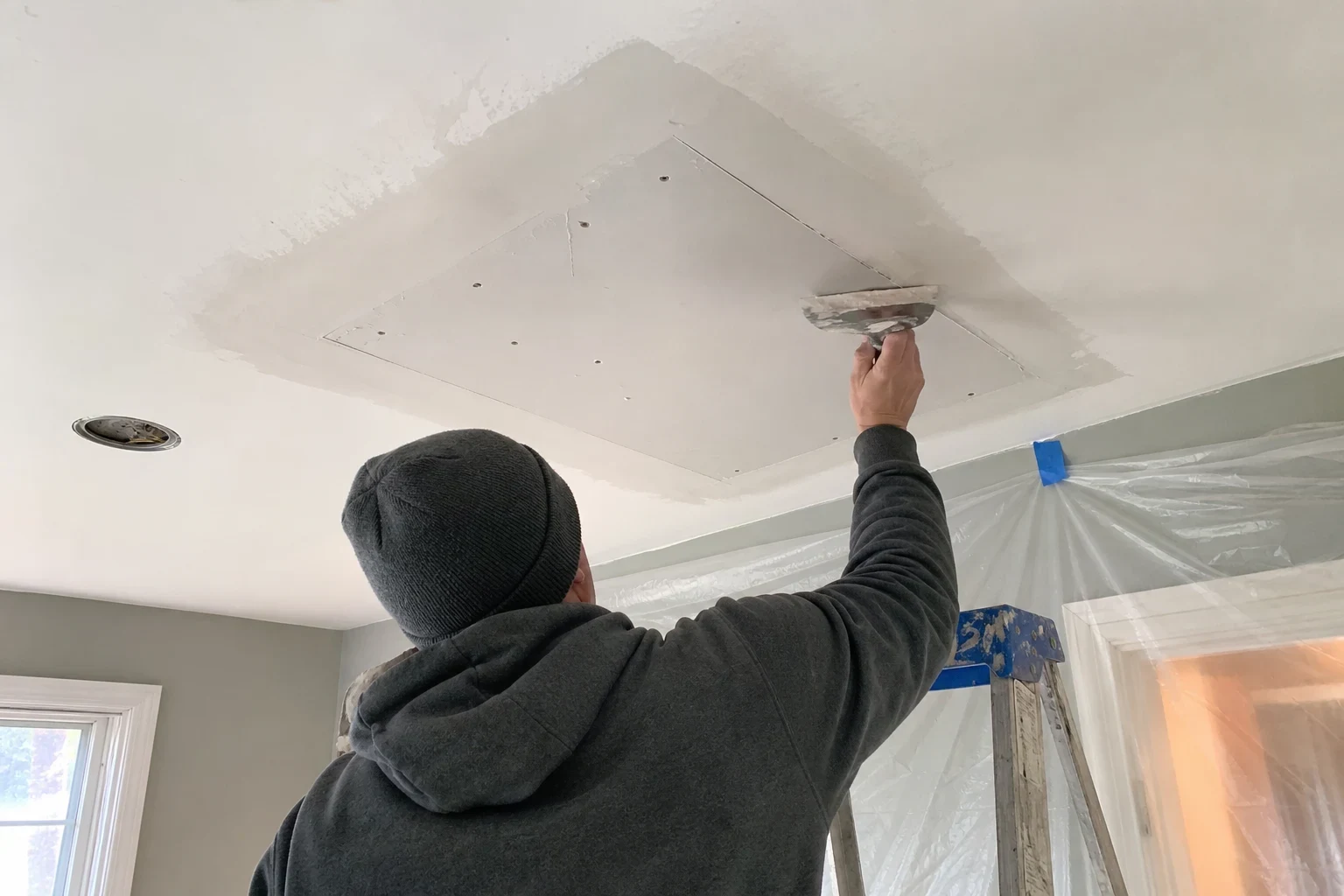
Overhead Damage Needs a Different Approach
A ceiling fails differently from a wall. Gravity pulls on every sheet, so a soaked panel, a loose screw line or a cracked tape joint keeps getting worse. Wet gypsum loses most of its strength, and a saturated section can drop without much warning. Our ceiling repair covers water-damaged board, sagging panels, cracked seams, nail pops and holes left after a light or fan was moved.
We treat it as overhead work first. Before cutting, we confirm the leak above has been stopped and the board reads dry on a moisture meter. We turn off the circuit before working near a fixture box and keep people and pets out of the room. Then we rebuild the ceiling so the repair sits flush with the surrounding plane and disappears under the texture.
Many homes in Mount Vernon have older plaster or sprayed acoustic ceilings. If a popcorn texture may date from before the 1980s, we recommend testing it for asbestos before anyone sands or scrapes it.
What Our Ceiling Repair Covers
Water-damaged section replacement
We cut back to sound board, landing the edges on joist centers or new backing. The joists get checked with a meter, then we hang 1/2-inch sag-resistant ceiling board, screwed rather than nailed, and tape the joints with setting-type compound.
Sag and loose-panel correction
Sags usually come from failed fasteners, undersized board or edges that never landed on framing. We re-fasten into the joists, add blocking where seams float, and replace any panel that has bowed permanently.
Crack and seam repair
A straight crack along a tape joint means the tape has let go. We open the joint, re-embed fresh tape, and feather each coat wide enough that no ridge shows when window light rakes across the ceiling.
Texture matching
Popcorn, orange peel, knockdown and smooth finishes each need their own mix and tool. We test the pattern on scrap board before spraying or troweling your ceiling.
Stain blocking and paint touch-up
Water stains bleed through ordinary paint. We seal them with a shellac or oil-based stain-blocking primer, then do a paint touch-up over the repaired area.
Signs Your Ceiling Needs Repair
Brown rings or yellow blotches
Water has reached the paper face at some point. Even after it dries, the board under a stain may be soft or the seams may have loosened.
A belly between joists
If you can see the ceiling dip, the panel is pulling away from its fasteners. Keep furniture and people out from under it until it is checked.
Bubbling paint or a damp soft spot
This can mean water is pooling on top of the board. Do not poke it. Put a bucket under it, clear the area and have it looked at.
Cracks or rows of nail pops
Long straight cracks follow tape joints, while small round bumps in a line are fasteners backing out. Both point to movement in the ceiling.
How a Ceiling Repair Day Runs
- 1
A phone conversation, then a close look
We ask what happened, whether the source of any leak is fixed, and roughly how big the damage is. On site we check moisture, framing and wiring, identify the texture, and photograph what we find.
- 2
Set up a safe, clean work area
We move or cover furniture, lay drop cloths, hang plastic sheeting over doorways and cover HVAC returns. The affected circuit is switched off, and we work from a stable ladder or rolling scaffold.
- 3
Cut out, frame and hang
Damaged board comes out in a clean rectangle. We add backing where needed, screw the new piece to the framing and apply setting compound, which hardens chemically and shrinks less than premixed mud.
- 4
Finish, texture and clean up
We sand with a vacuum-attached sander, apply the matched texture, prime and touch up. The room is HEPA-vacuumed and wiped down before we leave.
What Affects the Cost of Ceiling Repair
Ceiling work is priced on what we find once we see it. After looking, we give you a written estimate with each part of the job listed, so you know what is being repaired and why before work begins.
- Size and number of sections
- A single fixture hole is a short job. A stain that spans several joist bays means more board, more taping and more drying time between coats.
- Texture type
- Smooth and orange peel finishes blend quickly. Popcorn and heavy knockdown take extra steps to match, and older texture may need testing first.
- Height and access
- Stairwells, vaulted ceilings and rooms full of furniture need scaffolding or more setup to work safely.
- Plaster versus drywall
- Plaster on wood or metal lath needs different bonding and patching methods than standard gypsum board.
Ceiling Repair Questions
Something not covered here? (914) 685-8593
Is it safe to be in the room with a stained ceiling?
A dry, firm stain is usually not a hazard. A ceiling that sags, feels soft or has bubbling paint can be holding water and may give way. Keep everyone out from under it, put a container below and leave it untouched until it is inspected.
How long does the ceiling have to dry before you repair it?
It has to be dry all the way through, which often takes a few days with fans running once the leak is stopped. Board that stays wet can grow mold behind the paint, and joint compound will not bond properly to it. We check with a meter rather than guessing.
Can you match my popcorn or knockdown texture?
Yes. We match the pattern and thickness on a test piece before applying it to your ceiling. Under strong side light a new section can look slightly fresher at first, and once primed and painted it should blend in.
How much dust will this make in my home?
Cutting and sanding drywall makes fine dust, so we contain it. We seal doorways with plastic, cover returns, use a vacuum-attached sander and HEPA-vacuum at the end so the rest of the house stays clean.
Will insurance pay for my ceiling repair?
That depends on your policy and the cause of the damage, and only your adjuster can decide coverage. During our visit we photograph the damage and write up an itemized estimate, and both are yours to include with your claim. If you have questions about what we found, give us a call and we will walk you through it.
Get That Ceiling Fixed Safely
Tell us what you are seeing overhead and how it started. We will explain what the repair involves and set a time to look at it in person.