ServicesPaint Touch-Ups
Paint Touch-Ups in Mount Vernon
A good patch can still stand out if the paint over it is wrong. We prime the repair, match the color and the sheen, and blend the edges so the spot stops catching your eye, with dust and fumes kept away from the people living there.
When a touch-up is the right call
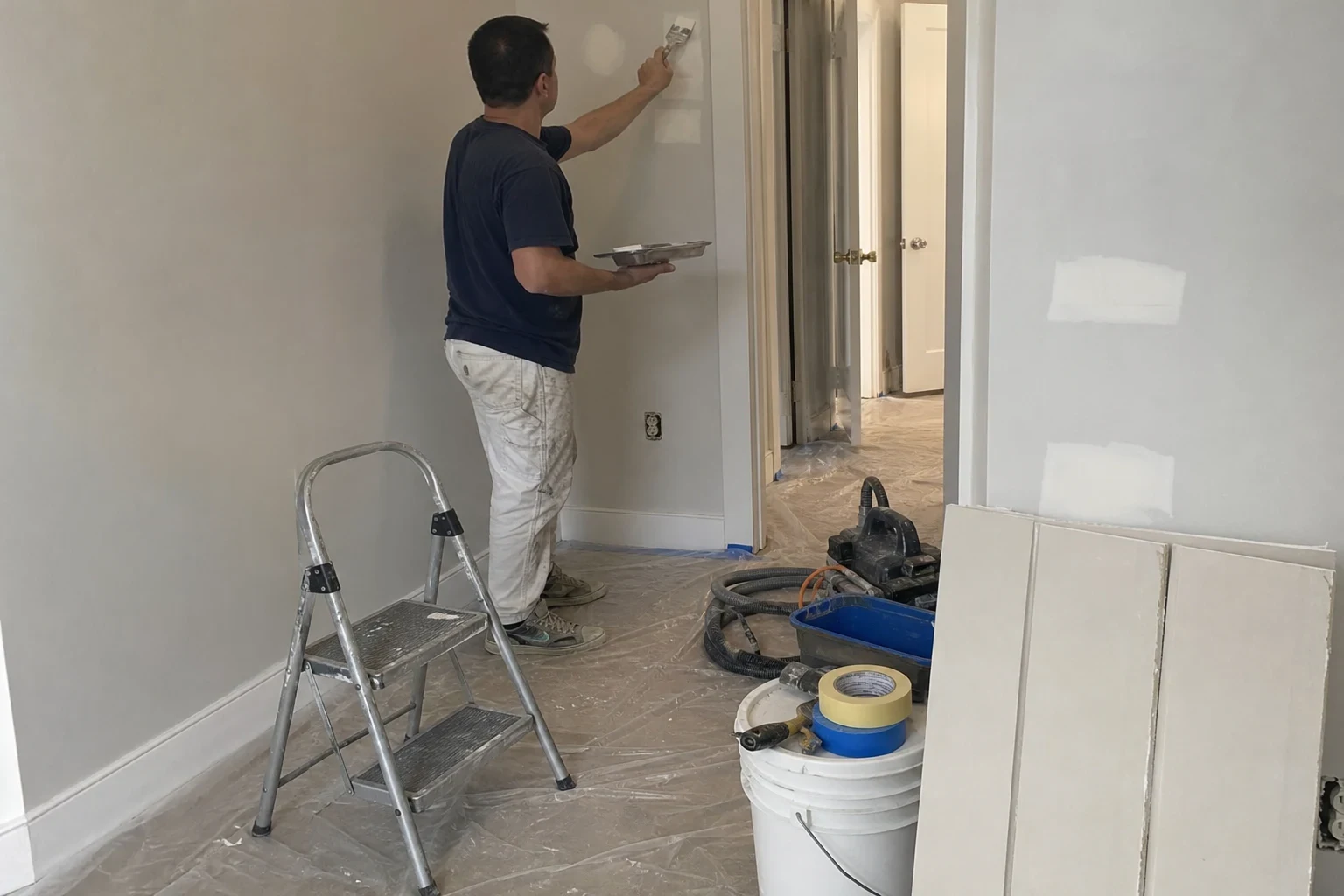
A paint touch-up covers a small area of an otherwise sound wall or ceiling: a fresh drywall patch, a scuff behind a door, nail holes left after a move, or a stain that has been sealed. It works when the surrounding paint is in fair shape and the problem is local.
Most touch-ups that fail do so for two reasons. The new paint dries at a different sheen than the old, or bare joint compound soaks up the paint unevenly and leaves a dull halo called flashing. We deal with both before the color goes on.
If the damage underneath is bigger than a few spots, we handle it first through our drywall repair or drywall patching work, then come back to the paint. We will tell you plainly when a small touch-up will not hide the problem.
What our touch-up work includes
- Room protection first
- We lay drop cloths, move or cover furniture near the wall and tape off trim and outlets. Children and pets stay out of the work area until we finish for the day.
- Primer over every repair
- Joint compound and bare paper are far more porous than painted drywall. A coat of primer seals them so the finish coat dries evenly and does not flash.
- Color and sheen matching
- If you have the original can, we check its label and stir it well. If not, we take a small chip from a hidden spot and have it matched, then test it on the wall before committing.
- Feathered edges
- We roll the touch-up with a nap close to the original so the stipple texture matches, and we feather the edges outward so there is no hard line.
- Low-odor products where possible
- For occupied rooms we lean toward low-VOC primers and paints and keep a window cracked or a fan pulling air out while we work.
- Cleanup
- Tape, drop cloths and paint debris leave with us. We wipe down the floor near the wall so you are not tracking dust through the house.
Signs your walls need a paint touch-up
A visible patch outline
You can see the shape of a repair when light hits the wall from the side. That usually means the compound was never primed or the sheen is off.
Shiny or dull spots
An eggshell wall touched up with flat paint, or the reverse, shows as a patch of different gloss.
Scuffs and marks that won't wash off
Flat paint burnishes when scrubbed, so cleaning a mark can leave a polished spot worse than the mark itself.
Nail holes after moving out
Landlords and property managers often need a unit's walls filled and touched up before showing it.
A stain you have already dealt with
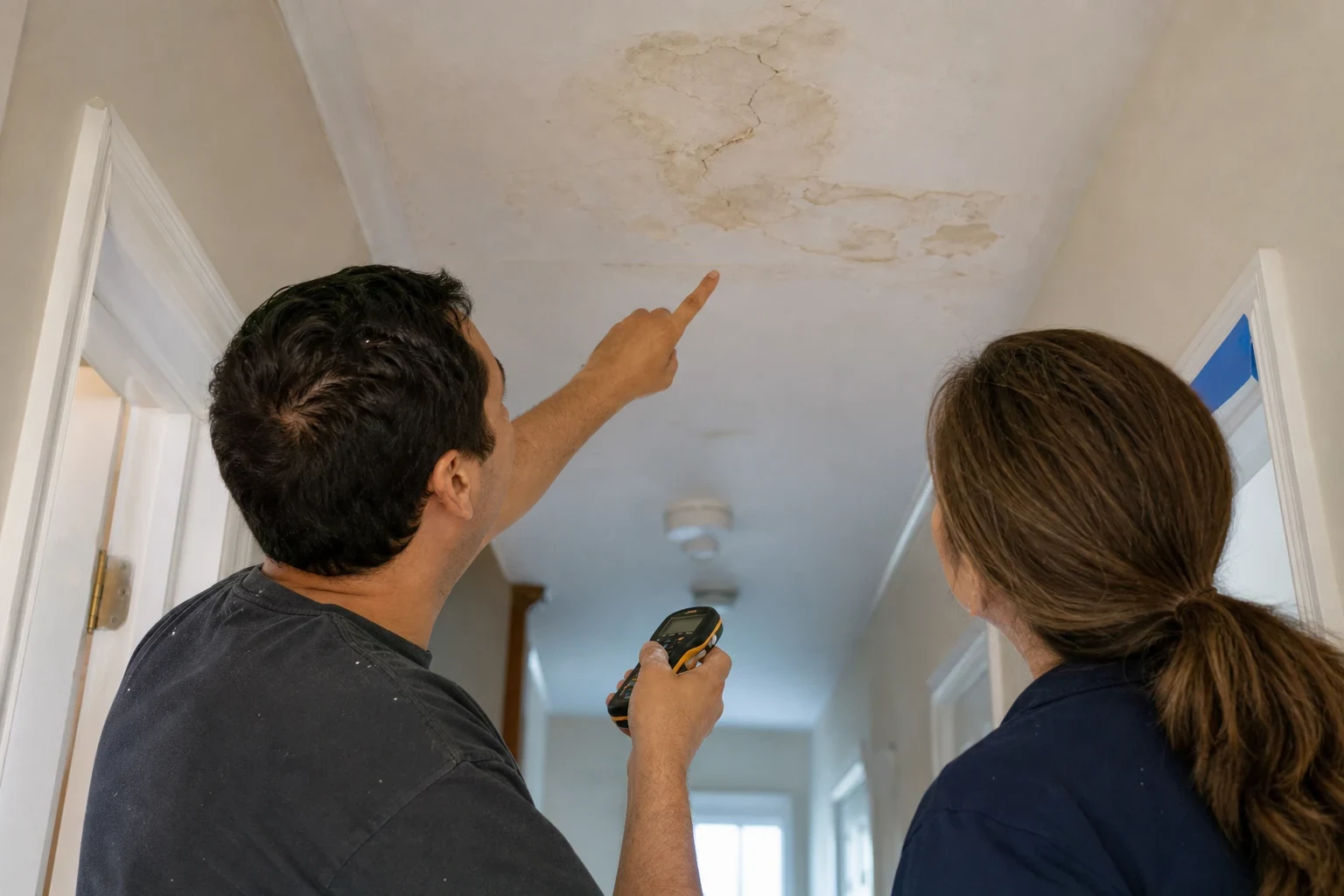
Once the source of a water stain is fixed and the drywall is dry, the stain needs a stain-blocking primer before any finish paint, or it bleeds through.
What affects the cost of a touch-up
Touch-up pricing depends on how much prep sits under the paint and how hard the existing finish is to match. We look at the walls, explain what we see and give you a clear figure before any work starts.
Number and size of spots
A handful of nail holes is a different job from a dozen patches spread across several rooms.
Matching the existing paint
Having the original can makes matching quicker. Faded, yellowed or unknown paint takes sampling and test spots.
Repair needed first
Cracks, dents or loose tape must be fixed before paint will hold, which adds drywall work to the visit.
Ceilings and height
Ceiling touch-ups and stairwells need ladders or planks and more setup time.
Older paint precautions
Where old paint may contain lead, extra containment and careful cleanup add time but keep your household safe.
How a touch-up visit runs
- 1
Look and test
We check the existing paint for sheen and adhesion. In homes built before 1978, which are common around Mount Vernon, we treat old paint as possibly containing lead and plan any sanding around that.
- 2
Prep and contain
We protect the floor and nearby furniture and close off the area. Where old paint must be smoothed, we use wet sanding or a vacuum-attached sander rather than dry hand sanding, so fine dust does not drift into other rooms.
- 3
Prime and paint
Primer goes on the repair and is allowed to dry fully. Then we apply the matched finish in thin coats, feathering past the edges, and check it in the room's own light.
- 4
Clean up and walk through
We pull tape, clear the area and show you the finished spots. Fresh paint needs a few weeks to cure fully, so we tell you when it is safe to wash.
Paint touch-up questions
I don't have my original paint. Can you still match it?
Usually, yes. We take a small chip from an out-of-sight spot, have it color matched and test it on the wall before painting. Very faded walls sometimes need a full wall section painted corner to corner so the difference falls at a natural break.
Why did my last touch-up look shinier than the rest of the wall?
That is flashing or a sheen mismatch. Unprimed joint compound absorbs paint differently, and fresh paint dries glossier than paint that has aged for years. Priming and using the correct sheen fixes most of it.
Is sanding old paint safe with kids or pets at home?
We keep children and pets out of the work area and avoid dry sanding of old paint. In older homes we use wet methods or a vacuum-attached sander and clean up with a HEPA vacuum and damp wipes.
Can you touch up a ceiling?
Yes. Ceilings are harder because flat white ceiling paint yellows and light hits it at a low angle, so we often paint to the nearest edge. Larger damage is handled through our ceiling repair service first.
How soon can we use the room?
The paint is dry to the touch within hours and the room can be used that day. Wait a few weeks before scrubbing the area so the paint can cure.
Get those spots to stop catching your eye
Tell us what the walls look like and how many areas need work. We will explain what is involved and how we keep dust and fumes away from your family.