ServicesDrywall Patching
Drywall Patching in Mount Vernon
We patch holes in drywall, from nail pops and anchor tears to fist-sized dents and square cut-outs left after an electrician or repair. Each patch gets proper backing, the right compound and careful sanding, with the work area sealed so dust stays out of the rest of your home.
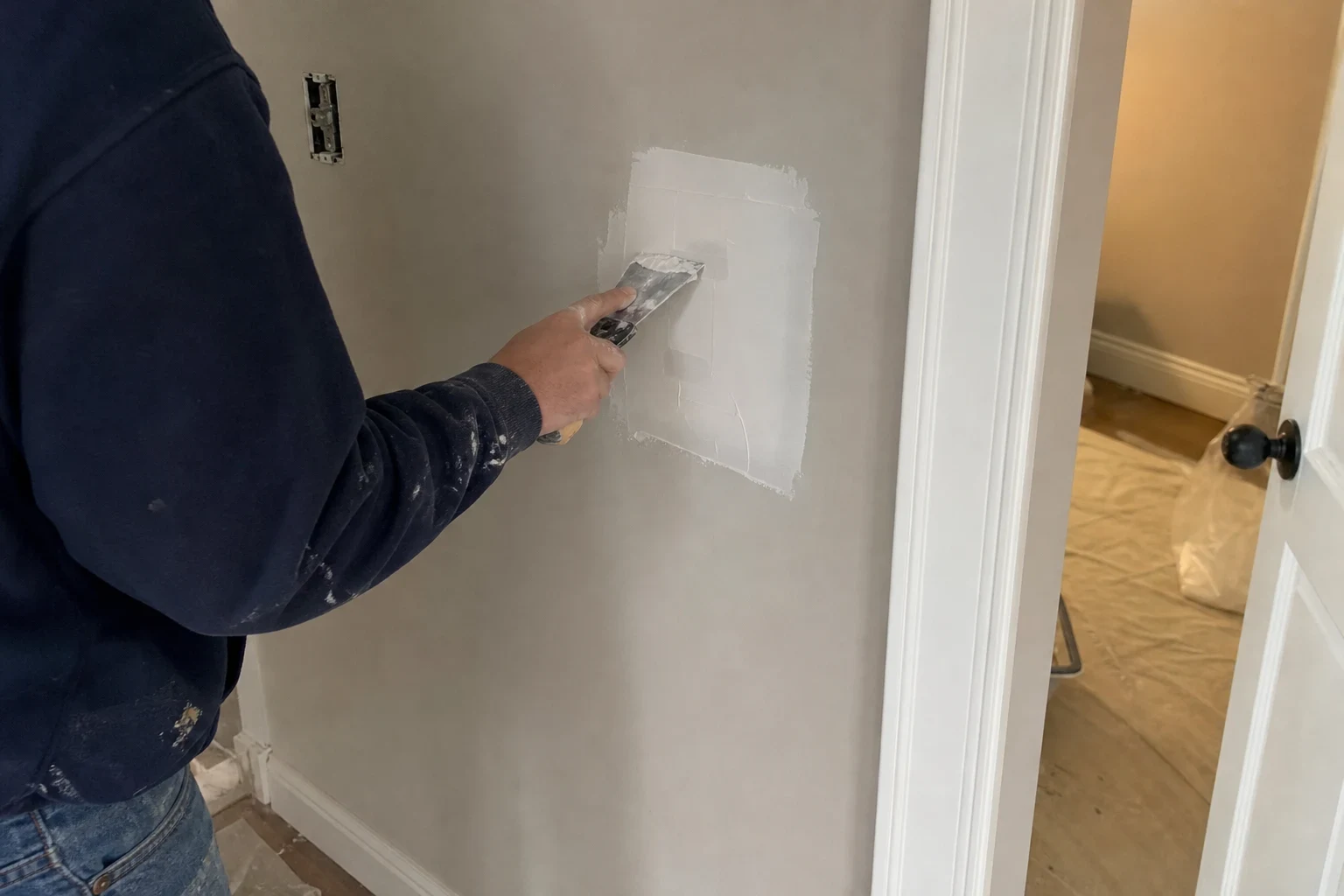
What Drywall Patching Covers
Patching is the fix for a defined hole or damaged spot in otherwise sound drywall. A doorknob that went through the wall, a TV mount pulled out of the board, a cut-out where someone reached a wire or a valve: these are patch jobs. The surrounding board is solid, so we repair the spot instead of replacing the sheet.
How we patch depends on size. Small holes under about an inch get filled with setting compound and taped if needed. Mid-size holes get a mesh or California-style paper-faced patch. Anything larger gets a piece of new gypsum board screwed to wood backing strips, because compound alone over a big opening will crack and sag. If the damage runs wider, or the board is soft from moisture, our drywall repair page covers that work.
Safety shapes how we set up. Before we cut, we check the cavity for wiring and pipes, and in older houses we treat existing paint and joint compound with care, since many walls around here predate 1978 and may contain lead paint.
What Every Patch Includes
Cavity check before cutting
We look and probe behind the hole before squaring it up with a saw. Cutting into a live cable or a water line is the most common way a small patch turns into a big problem.
Squared opening and solid backing
Ragged edges get cut back to a clean rectangle. For larger holes we screw furring strips or scrap studs behind the opening so the new piece is fastened, not floating on mud.
Setting compound for the first coats
We use a chemically setting compound for fill and taping coats. It hardens without relying on drying alone, shrinks less than premixed mud and resists cracking at the patch edges.
Feathered coats and fine sanding
Each coat goes wider than the last so the patch blends into the wall plane. We sand with a fine screen and check with a work light held low across the surface to catch ridges.
Dust containment and cleanup
Plastic sheeting, floor protection and a HEPA vacuum keep sanding dust in the clean work area. We wipe down and vacuum before we leave.
Signs a Patch Is the Right Call
A clean hole in firm board
If the drywall around the damage is hard and dry when you press on it, a patch will hold. Soft or crumbling board needs more than a patch.
Doorknob or furniture impact
Round dents and punch-throughs behind doors are textbook patch work. We can mention adding a door stop so it does not happen again.
Pulled anchors and old mounts
Toggle bolts and plastic anchors often tear out a cone of gypsum when removed. Filling them flush takes more than a dab of spackle.
Access cut-outs left open
After electrical or pipe work, you may be left with a square hole. We close it with new board on backing so it stays flat.
Earlier patches showing through
A patch that bulges, shows a halo under paint or has cracked edges was likely done with lightweight spackle and no backing. We cut it out and redo it properly.
How a Patching Visit Runs
- 1
Phone conversation first
You tell us the number of holes, their rough size and the room. That lets us bring the right board thickness, compound and containment gear.
- 2
Setup and protection
We lay floor covering, hang plastic where sanding will happen and keep kids and pets out of the area. In pre-1978 homes we keep disturbed paint dust contained and collected rather than swept.
- 3
Cut, back and fasten
We check the cavity, square the hole, add backing and screw in a matching piece of drywall. Then we tape the seams and apply the first setting coat.
- 4
Coats, sanding and texture matching
Patches need time between coats, so many jobs take two short visits. Once smooth, we match any wall texture, from light orange peel to a skim-smooth plaster look, and prime the patch.
- 5
Final cleanup
We vacuum, remove the plastic and walk you through the finished spots. If you want color on the patches, our paint touch-ups service can follow.
What Moves the Cost of a Patch
Patch pricing comes from labor and drying time more than materials. A small job still needs setup, containment and return trips between coats. We explain each factor on the phone and give you your quote before work starts.
- Size and number of holes
- One mid-size hole and six of them use the same setup, so grouping patches into one visit lowers the cost per patch.
- Wall surface and texture
- A smooth wall is simpler to blend than one with knockdown or orange peel. Matching texture adds a step and some test passes.
- Location and access
- Patches on stairwell walls, behind fixtures or high on tall walls need ladders or planks and more care around the space.
- Older paint and plaster
- Walls that may carry lead paint need extra containment and cleanup. Patches in plaster-and-lath or veneer plaster walls also take different materials.
Drywall Patching Questions
Something not covered here? (914) 685-8593
Can you patch a hole in one visit?
Tiny holes sometimes, but most patches need two visits. Each coat of compound has to harden before the next goes on and before sanding. Rushing it leaves soft spots that shrink and show later.
Will I be able to see the patch afterward?
Done right, no. We feather the compound wide, sand it flat, match the texture and prime it. Fresh paint over the area is what makes it disappear, which our paint touch-ups service can handle.
How do you keep dust out of the rest of the house?
We seal off the area with plastic, cover the floor and sand with a HEPA vacuum attached or close at hand. Cleanup is part of the job, not an extra.
My house is old. Is patching safe?
It can be, with the right practices. We assume older paint may contain lead, keep dust contained and collected, and avoid dry sweeping. We also check behind the wall for wires and pipes before any cutting.
Do you patch walls in rental units?
Yes. Landlords and property managers call us for anchor holes, door damage and access cut-outs between or during tenancies. We work in the units you point us to and clean up before we go.
Get Those Holes Closed Properly
Tell us what you are looking at and how many spots need work. We will explain how we would patch them and what the job involves.