Mount Vernon, NY
Safe, Clean Drywall Repair in Mount Vernon
We repair cracked, dented and water-stained drywall, hang and finish new board, fix sagging ceilings and blend paint touch-ups so the repair disappears. Every job runs behind plastic sheeting with floor protection and HEPA dust collection. We work across Mount Vernon and nearby towns like Pelham and New Rochelle.
- Sealed, dust-controlled work areas
- Written line-item estimates
- Photos of what we find
- Cleanup before we leave
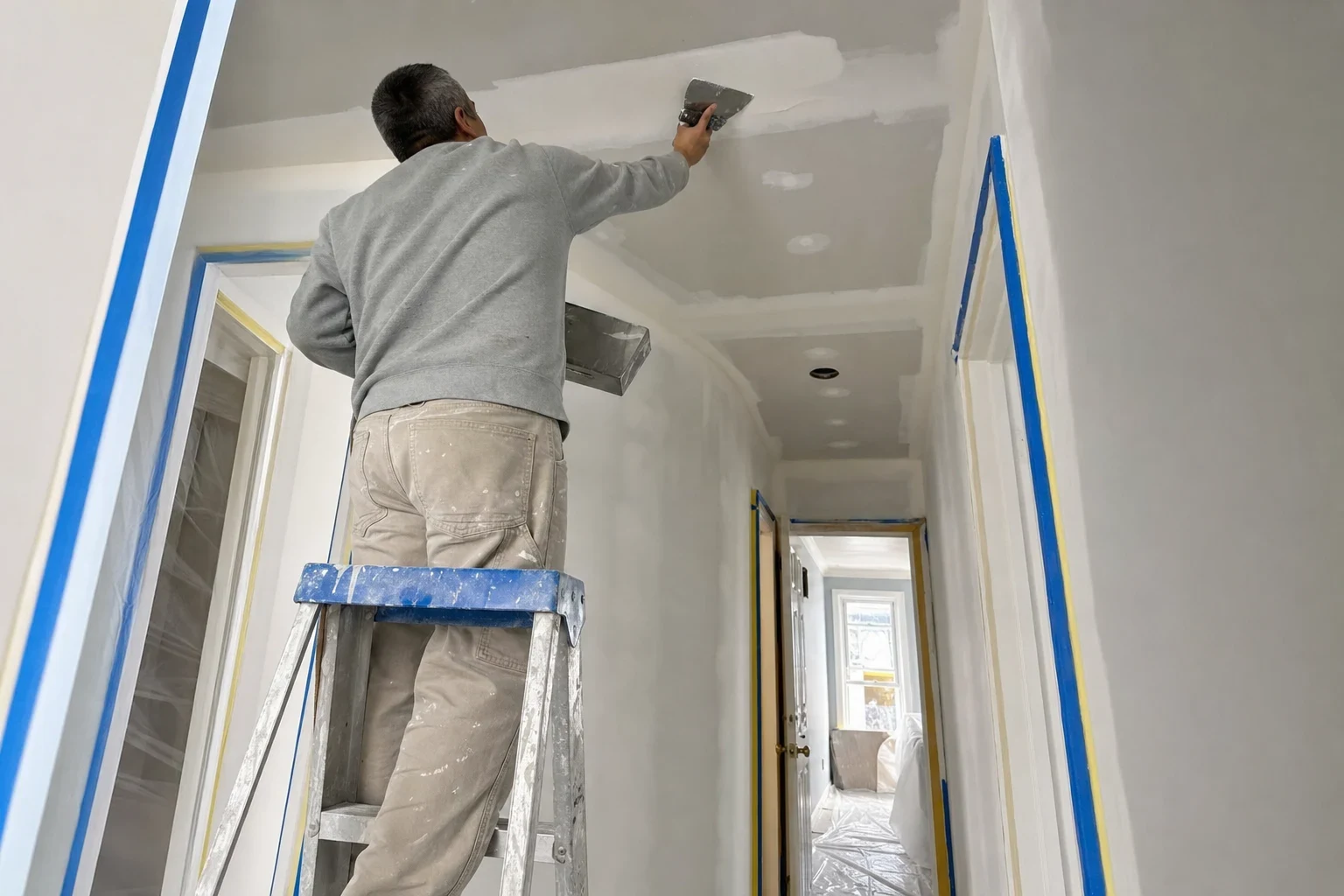
What Shapes the Cost of a Drywall Job
No two repairs are priced the same, because the size of the hole is only part of the job. These are the things that move the number most. We explain each one on your estimate so nothing shows up later as a surprise.
We look at the damage, explain what we think is behind it and give you a written estimate broken out by line item. If something hidden changes the scope once a wall is open, we stop and talk it through with you before going further.
- Size and number of repairs
- A doorknob hole and a whole water-damaged ceiling are different jobs. Several small patches in one visit usually cost less per patch than separate trips, since drying time is shared.
- What caused the damage
- A dent from furniture is cosmetic. A stain from a leak means checking that the area is dry and that the board, insulation and framing behind it are sound before new material goes in.
- Ceiling versus wall
- Overhead work takes staging, more setup time and extra care with falling debris. Ceiling repair also often involves texture matching, which adds steps.
- Texture and finish level
- Smooth walls need careful feathering and more sanding to hide a patch under raking light. Matching orange peel, knockdown or an older hand-applied texture takes trial and adjustment.
- Containment and older materials
- Rooms that are lived in, hard to seal or close to bedrooms need more protection. Surfaces suspected of containing lead or asbestos may need testing before work, which affects scheduling.
- Access and room setup
- Stairwells, high ceilings and rooms full of furniture take longer to protect and work in safely.
Drywall and Ceiling Work We Handle
Most calls start with a hole, a crack or a stain, and the fix depends on what caused it. We handle drywall repair and drywall patching for everyday damage, drywall hanging when sections need new board, and drywall finishing from tape and mud through final sanding. Ceiling repair, wall repair on plaster and board, surface preparation and sanding, and paint touch-ups round out the work so the repaired area matches the wall around it.
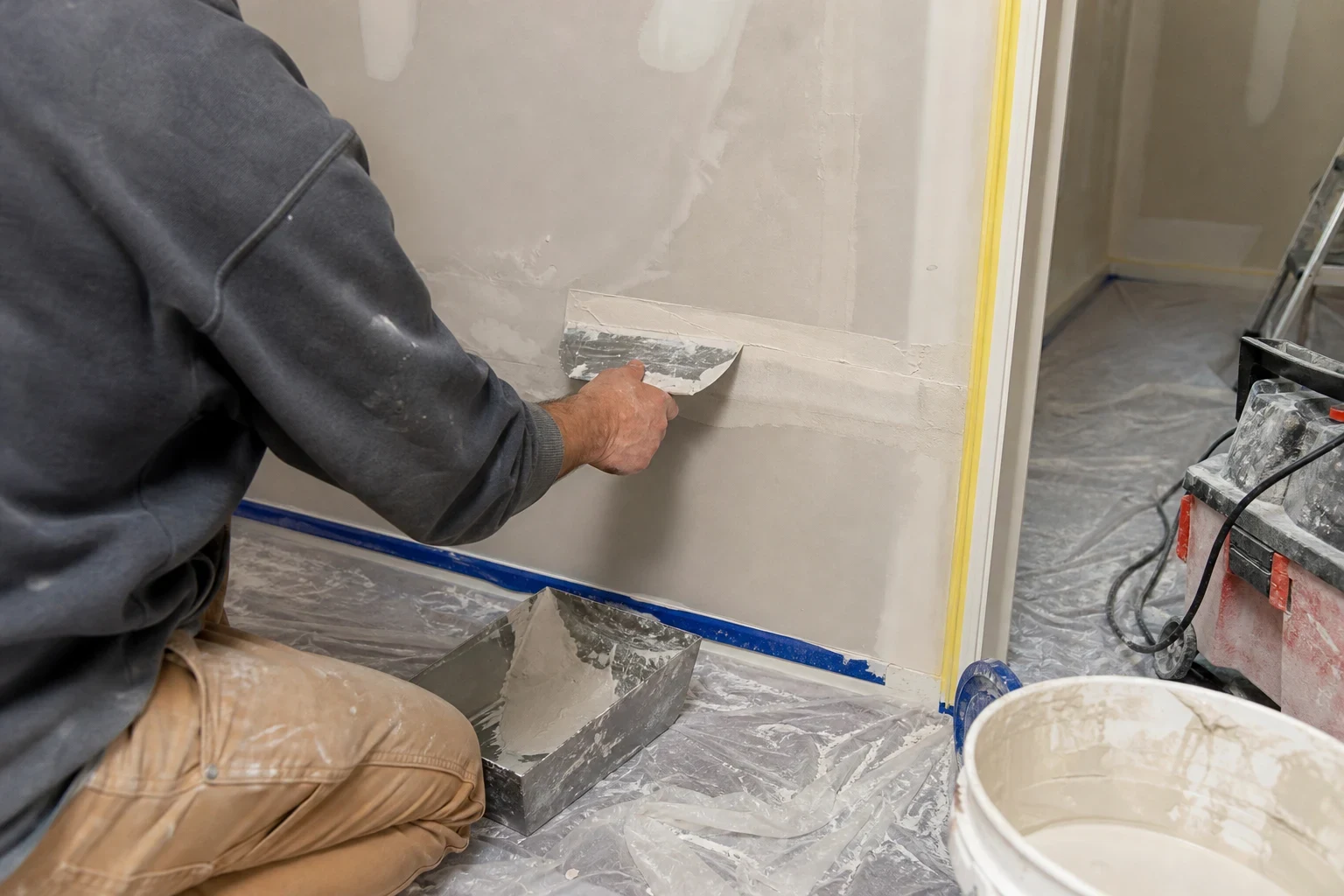
Drywall Repair
Cracked, soft, stained or broken drywall repaired at the cause, with wiring checked before cutting and dust kept out of the rest of your home.
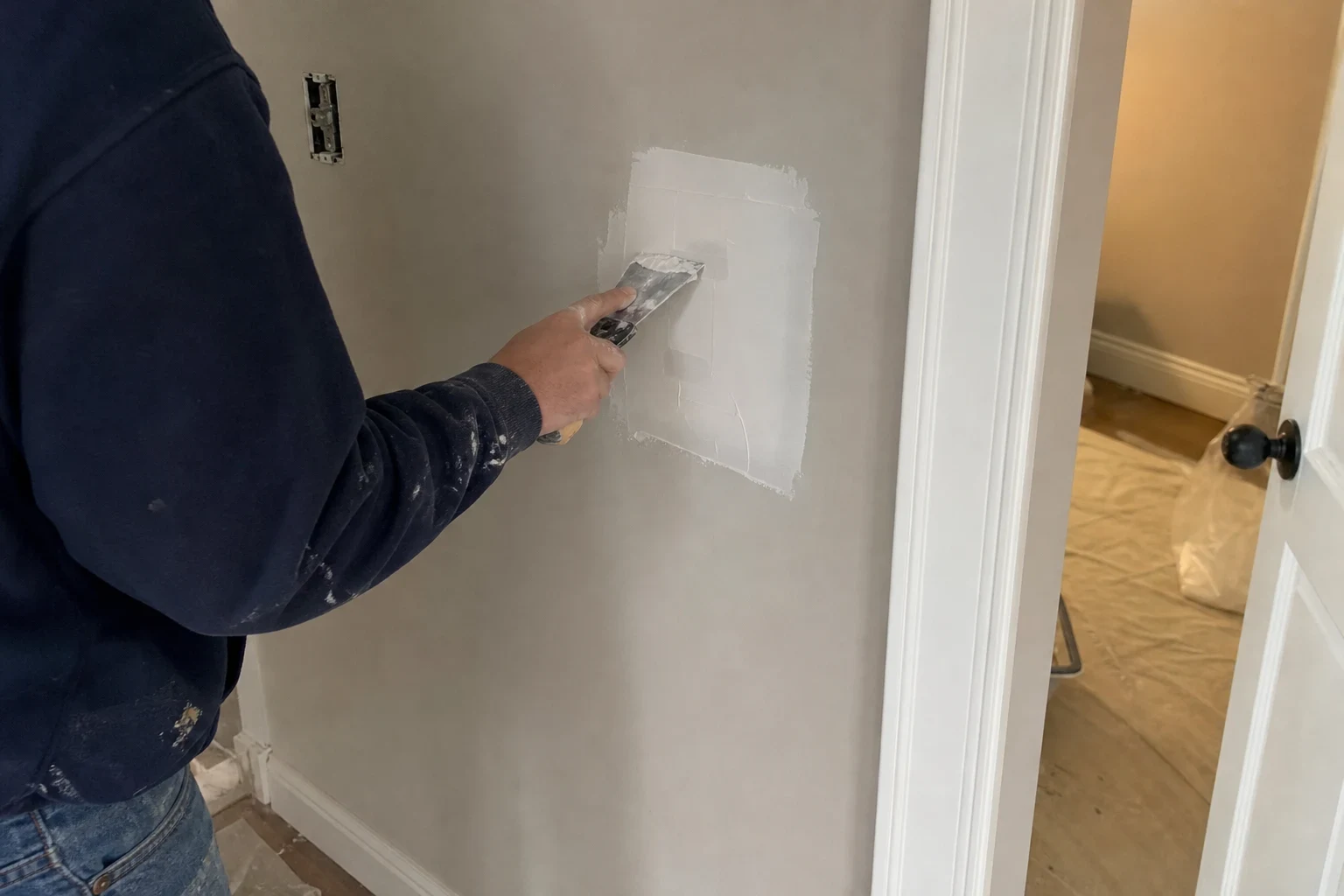
Drywall Patching
Holes from doorknobs, anchors, old fixtures or access cuts, patched with the right backing and compound and sanded under dust control.
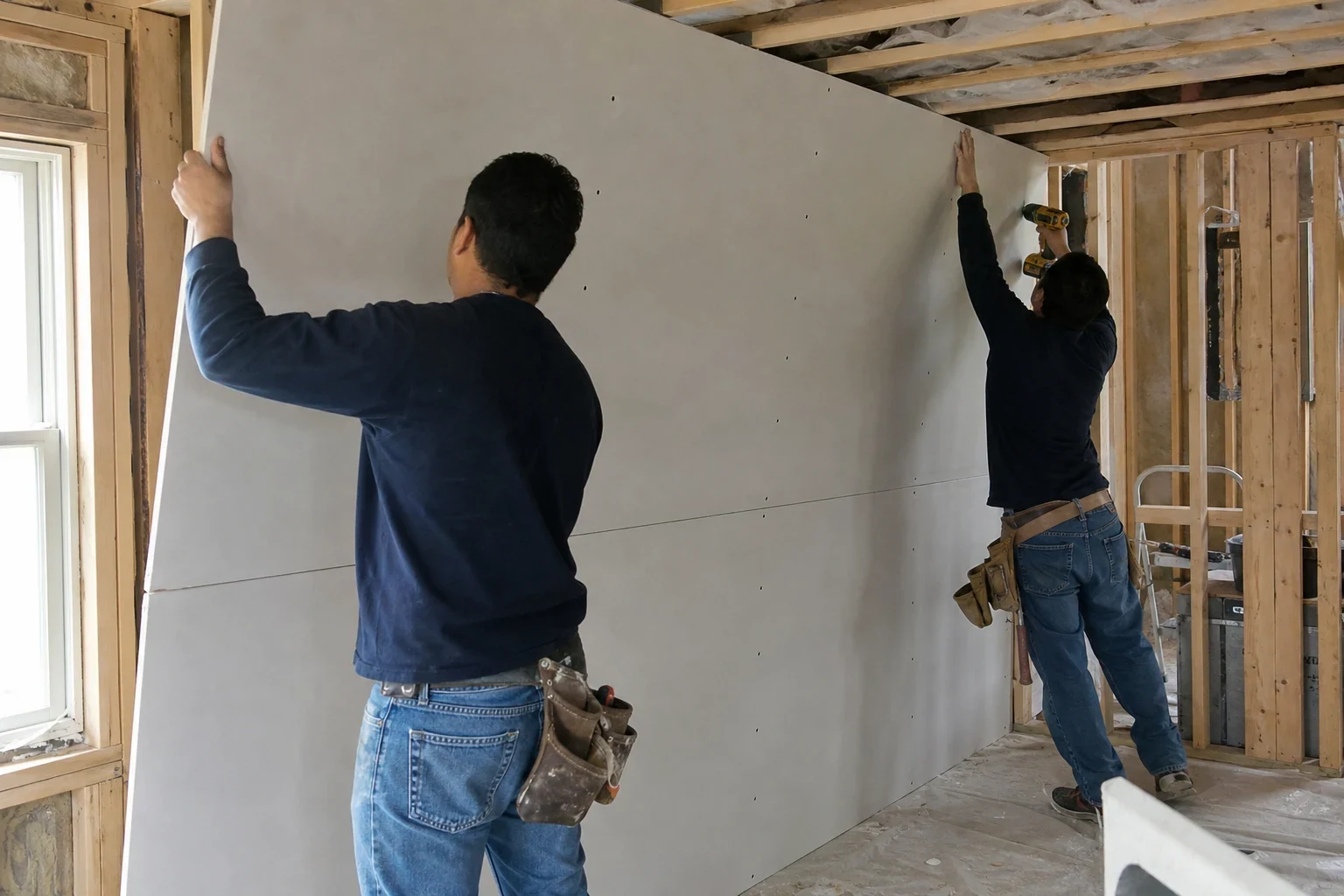
Drywall Hanging
New drywall for basements, additions and gutted rooms, with the correct board for each space and every panel fastened tight to the framing.
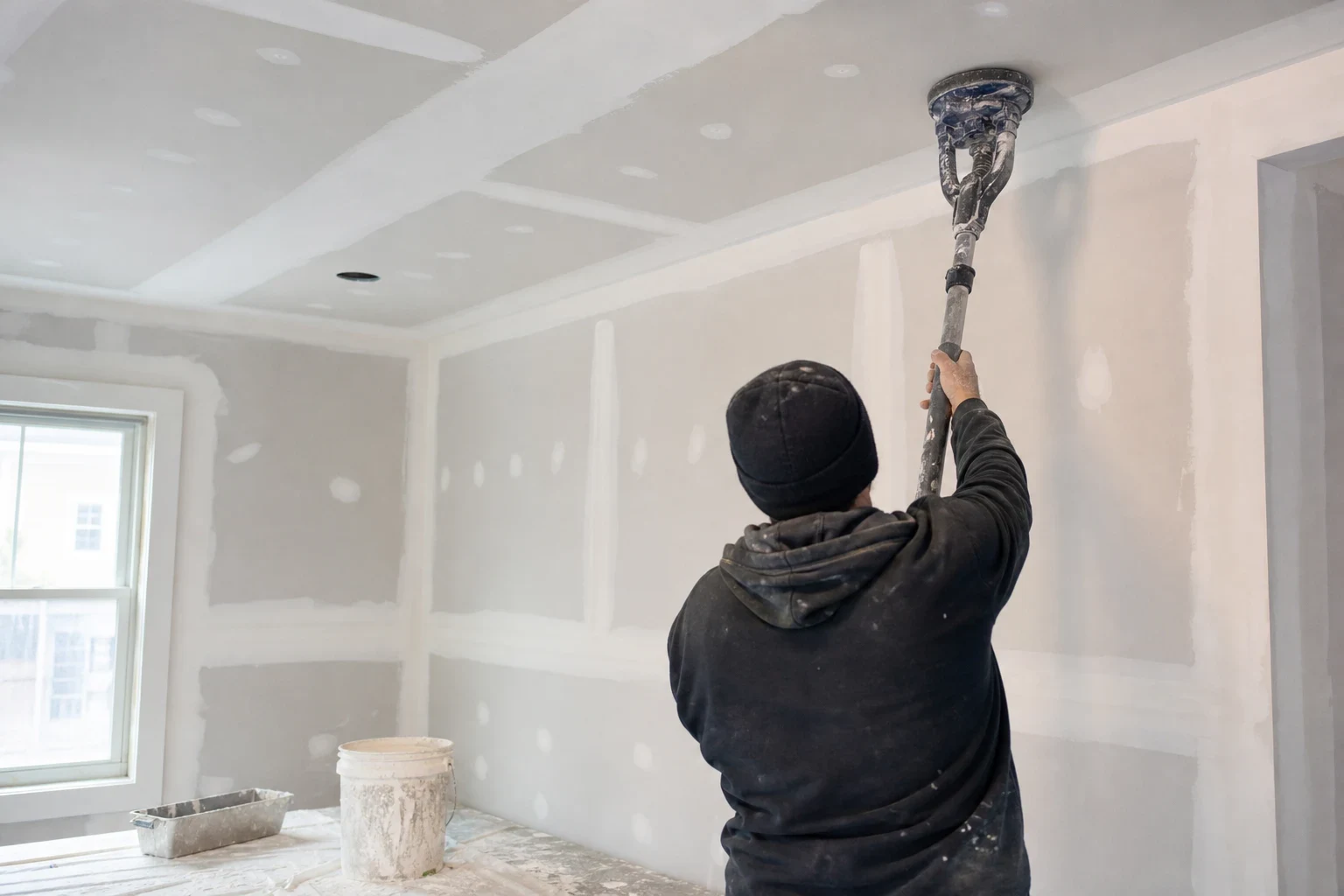
Drywall Finishing
Taping, mudding, corner bead and sanding to a paint-ready Level 4 or Level 5 surface, with containment and HEPA dust control.
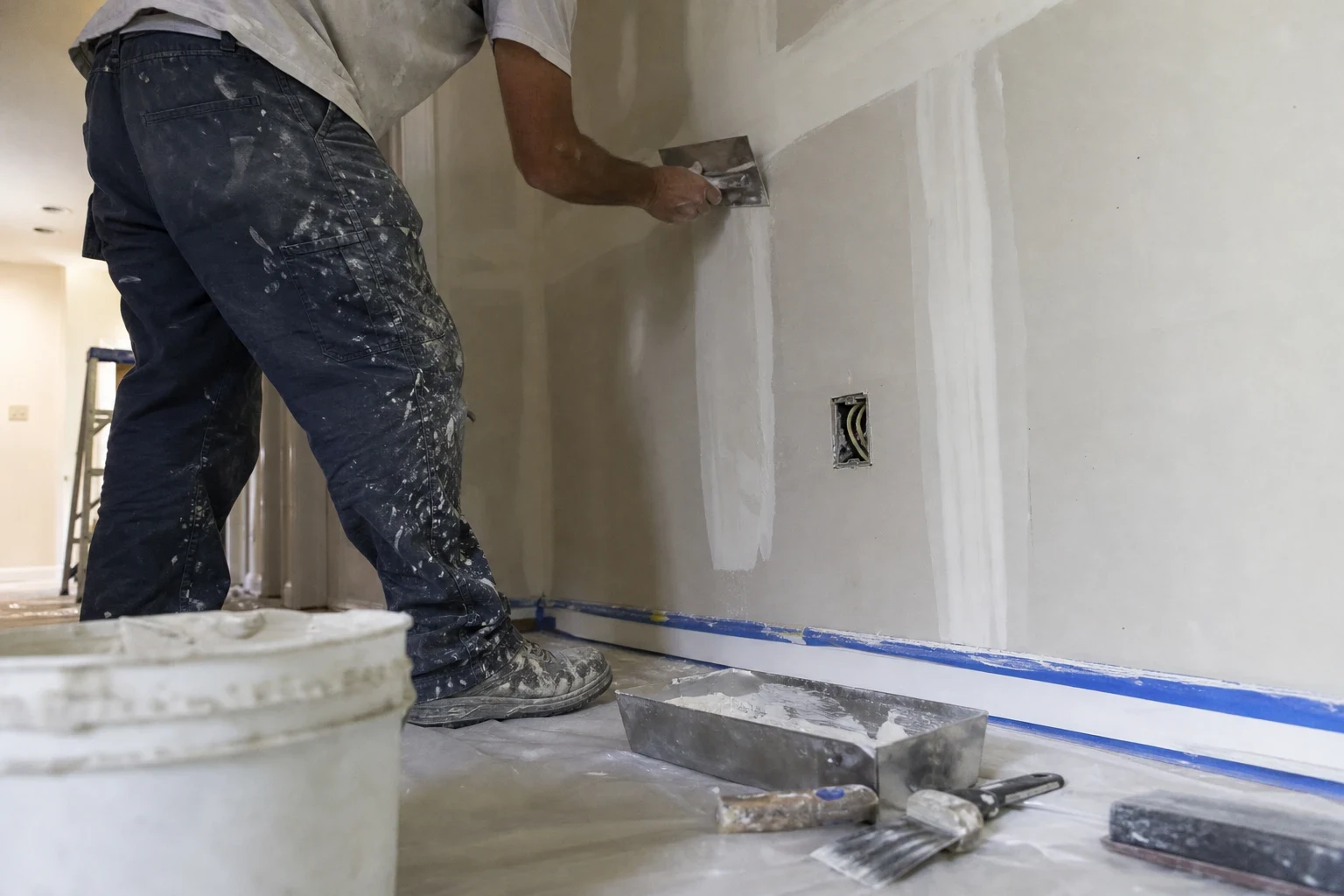
Wall Repair
Repairs for cracked plaster, failed drywall seams, crushed corners and water-damaged wall sections, with the dust kept inside a sealed work area.
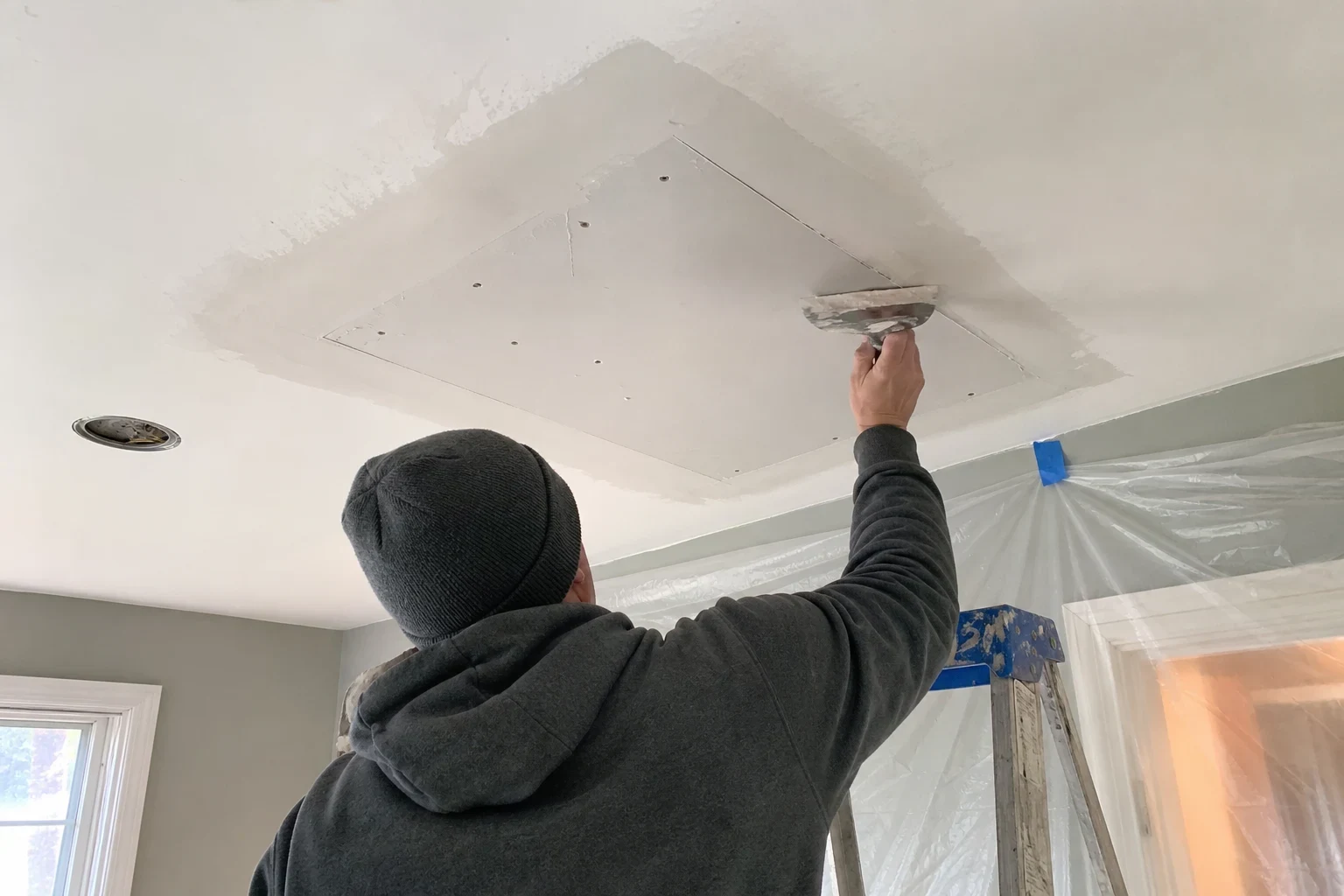
Ceiling Repair
We fix stained, cracked and sagging ceilings, from cutting out wet board to matching popcorn or knockdown texture, with the work area sealed and safe.
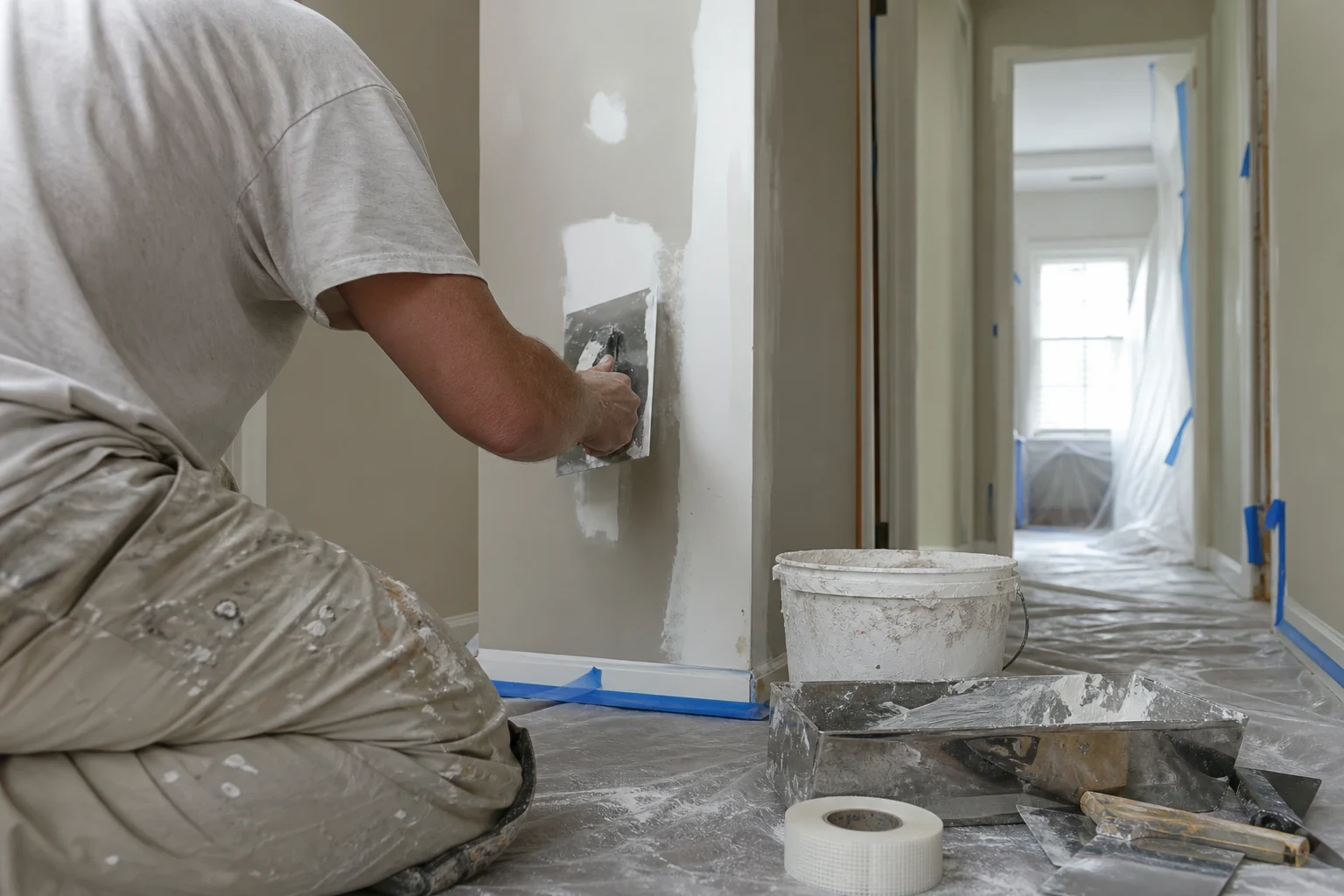
Surface Preparation and Sanding
We repair, sand and prime walls and ceilings under dust containment, with a lead check first when the paint is old.
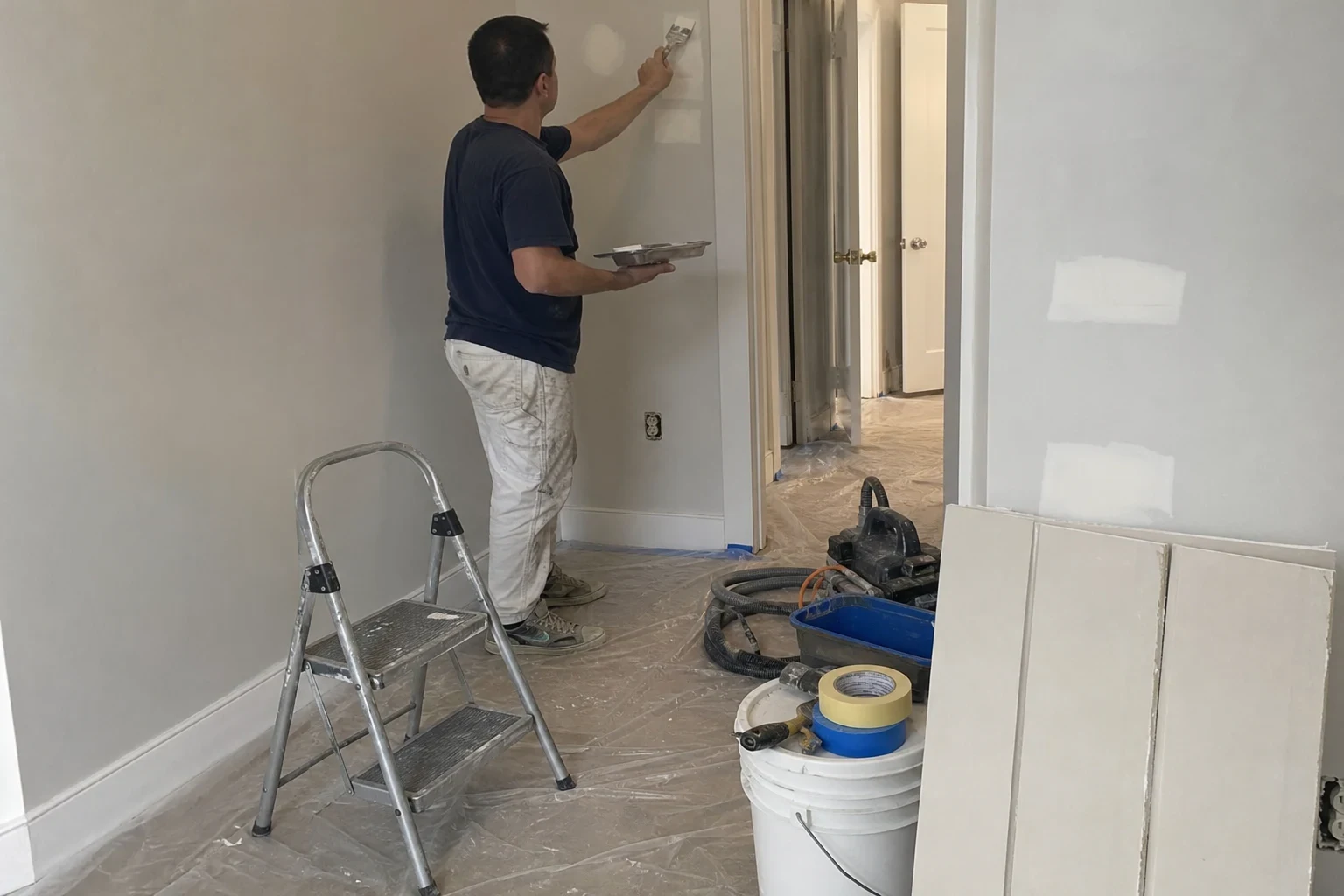
Paint Touch-Ups
Color and sheen matched paint over patches, scuffs and repaired drywall, with primer under every repair and dust kept out of the rest of your home.
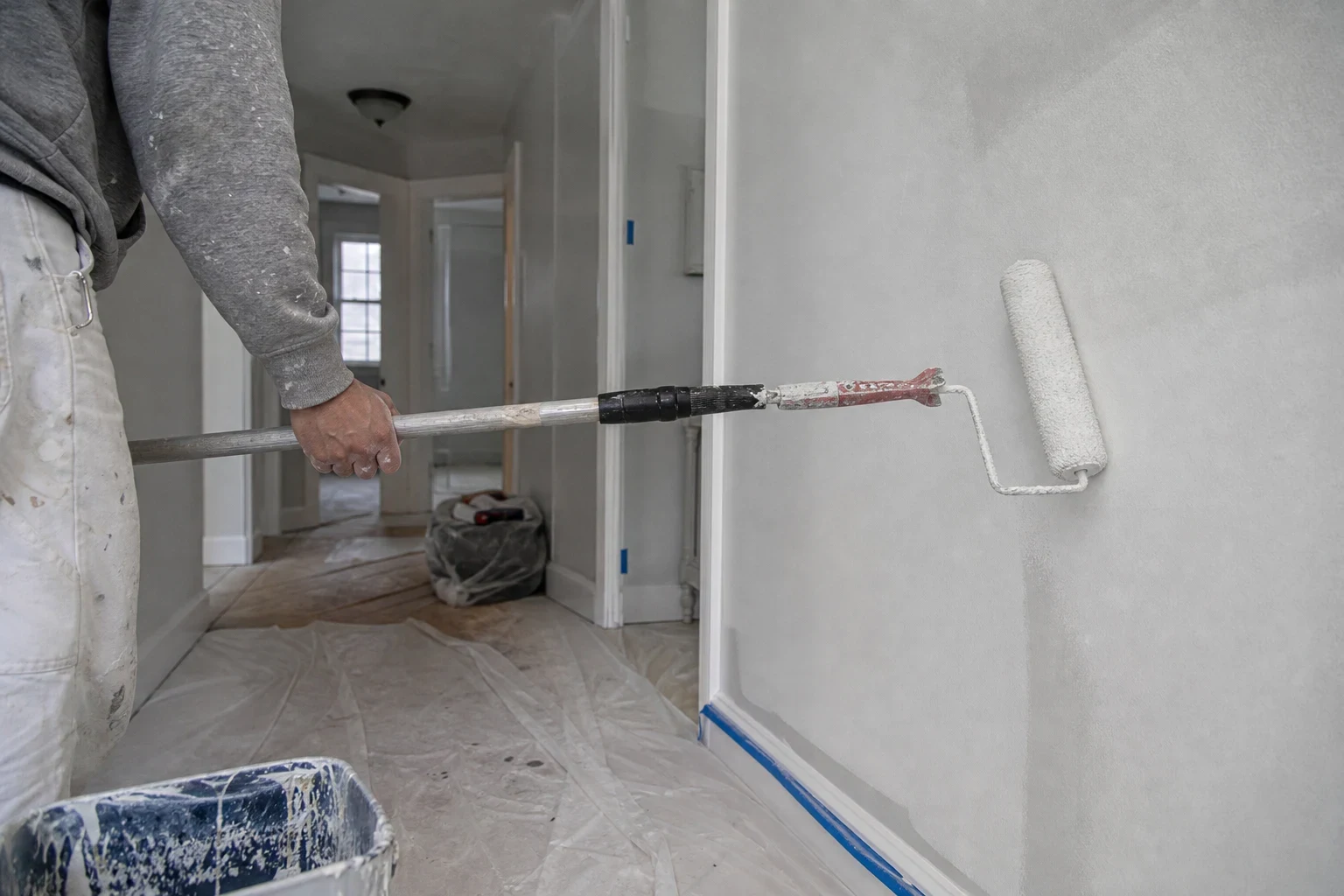
Paint-Ready Walls
We repair and prime drywall under dust control, check old paint for lead before sanding, and blend paint at every repair.
How a Repair Runs, Start to Finish
Most jobs follow the same order. Joint compound needs drying time between coats, so many repairs take more than one visit.
- 1
Phone call and description
You tell us what happened, where the damage is and how big it is. Photos of the area help us plan the visit and the materials.
- 2
Look, measure and estimate
We inspect the damage, check for moisture with a meter where a leak is involved and give you a written estimate with the scope spelled out.
- 3
Protect the room
Floors get covered, doorways sealed with plastic and vents closed. Furniture is moved or wrapped, and we set ladders and staging on stable footing.
- 4
Repair, tape and finish
We cut out damaged board back to solid framing, fasten new drywall, tape the seams and apply compound in thin coats. Each coat dries fully before sanding, which prevents shrinkage cracks and bubbling later.
- 5
Prime, touch up and clean
New compound is primed so paint does not flash, then we blend a paint touch-up into the surrounding wall. We HEPA-vacuum, remove the sheeting and leave a clean work area.
Where We Work
We serve homeowners, landlords and property managers throughout Mount Vernon, NY. We also take drywall and ceiling jobs in Pelham, Pelham Manor, Bronxville, Eastchester, New Rochelle and Yonkers, along with parts of the Bronx, Mamaroneck, Greenville and Hastings-on-Hudson.
- Mount Vernon
- Pelham
- Bronxville
- Pelham Manor
- Bronx
- Yonkers
- New Rochelle
- Eastchester
- Mamaroneck
- Greenville
- Hastings-on-Hudson
If you are close to these towns but not listed, ask when you call and we will tell you whether we can schedule the work.
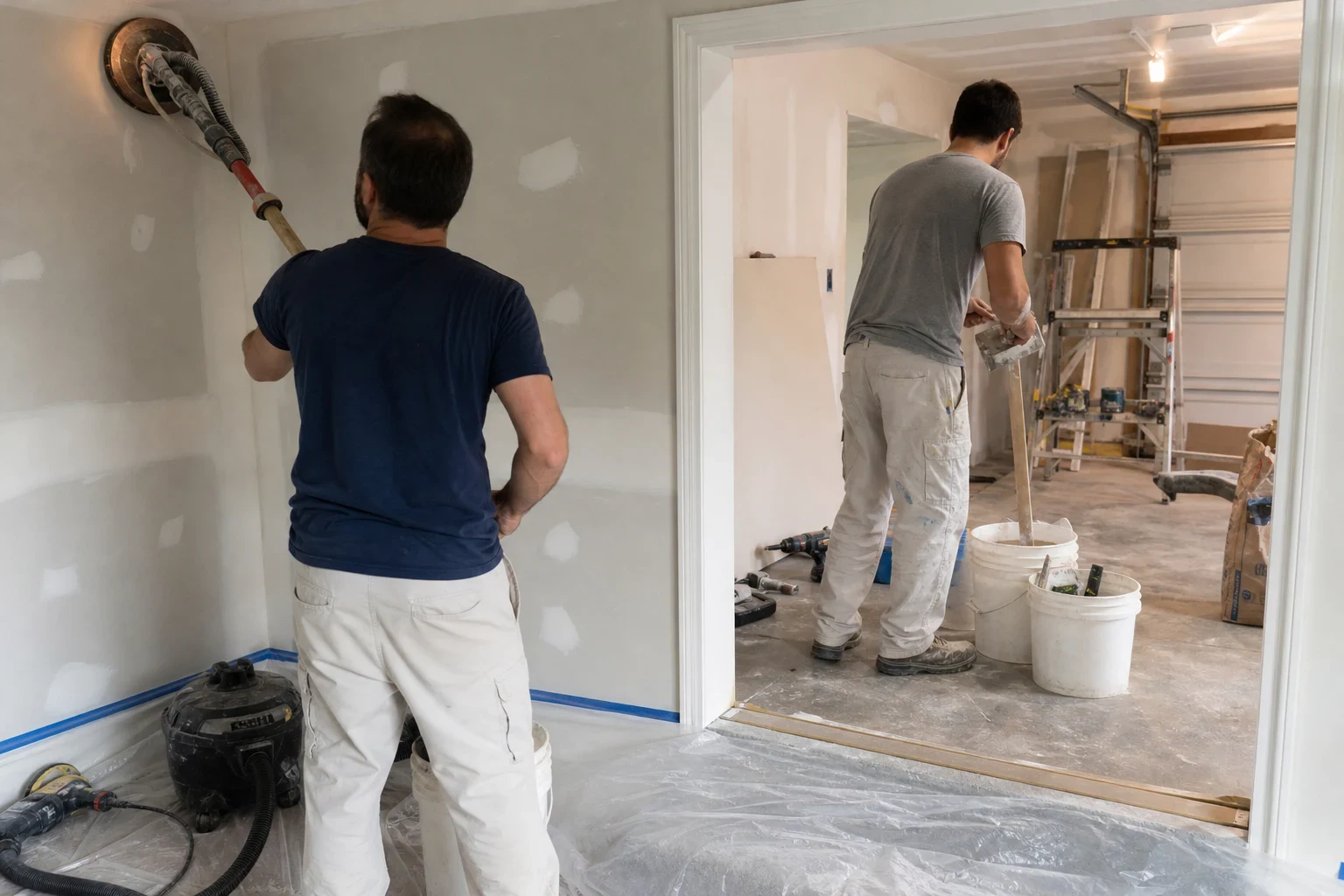
About Mount Vernon Drywall Repair
We are a drywall company that works inside occupied homes, so we think about the people living there as much as the wall. Children, pets and anyone with asthma are the reason we seal rooms, collect dust at the sander and keep tools and cords out of walkways at the end of each day.
Our focus is narrow on purpose: drywall, plaster wall and ceiling repair, new board, finishing and the touch-ups that make a repair invisible. We explain why the damage happened, whether it is likely to come back and what a lasting repair involves, in plain terms, before any work begins.
How We Keep Your Home Safe While We Work
Drywall work makes fine dust, involves ladders and sometimes opens walls near wiring. We plan every job around those risks first, then around the finish.
- 01
The work area is sealed off
We hang plastic sheeting over doorways, cover floors with taped protection and close supply vents in the room. Gypsum dust is fine enough to drift through a house on air currents, so containment goes up before any cutting or sanding starts.
- 02
Sanding with dust collection
We use sanders connected to HEPA vacuums wherever the surface allows, and wet-sponge finishing on small areas. That keeps most joint compound dust out of the air instead of settling on furniture, bedding and toys.
- 03
Older surfaces treated with caution
Many homes in the area were built long before modern paint and joint compound rules. We treat old painted walls and textured ceilings as if they could contain lead or asbestos, and we stop and tell you before disturbing anything suspect so it can be tested first.
- 04
We check behind the wall before we cut
Before opening drywall we locate studs, outlets and likely wire and pipe runs, and we cut shallow. A drywall saw driven blind into a wall is how cables get nicked, so we avoid it.
- 05
You see what we found
If we open a wall and find wet framing, mold or damaged wiring, we photograph it and show you before we close anything up. You decide the next step with the facts in front of you.
Questions We Hear Most
Something not covered here? (914) 685-8593
How much dust will a drywall repair make in my home?
Cutting and sanding drywall always creates fine dust, but most of it can be kept in one room. We seal doorways with plastic, cover floors, close vents and sand with HEPA dust collection. At the end of each visit we vacuum the work area so dust does not get tracked through the house.
Can you make a patch blend in so I cannot see it?
In most cases, yes. The patch is built up in thin coats, feathered wide past the repair and sanded flat, then primed and matched with a paint touch-up. Texture matching on an older wall or ceiling can take a few test passes, and we will tell you upfront if an exact match is unlikely.
My ceiling has a water stain. Is it safe to just paint over it?
Not until the source is fixed and the board is dry. Wet drywall loses strength and can sag or fall, and moisture trapped behind fresh paint can grow mold. We check the area with a moisture meter, replace any soft or crumbling board and seal the stain with a stain-blocking primer before finishing.
My house is older. Is there lead or asbestos to worry about?
Older paint can contain lead, and some older joint compounds and textured ceilings contained asbestos. We treat these surfaces with caution and will not sand or remove suspect material until it has been tested. If testing is needed, we explain why and how it affects the schedule.
How long does a typical repair take?
A small patch can often be finished over two short visits because each coat of compound has to dry before the next. Larger repairs, new board or ceiling work usually take several days for taping, coats, sanding and priming. We give you the expected schedule with your estimate.
Do I need to move furniture or leave the house?
You do not need to leave for most jobs. We ask that small items and valuables be moved from the work area, and we can help shift and cover larger furniture. If someone in the home has breathing problems, we may suggest they stay out of that room while sanding is underway.
How do I get a quote?
Call us and describe the damage, where it is and what caused it if you know. We will set up a time to look at it and give you a written estimate with each part of the job listed. Your quote comes by phone and in writing, never by guesswork.
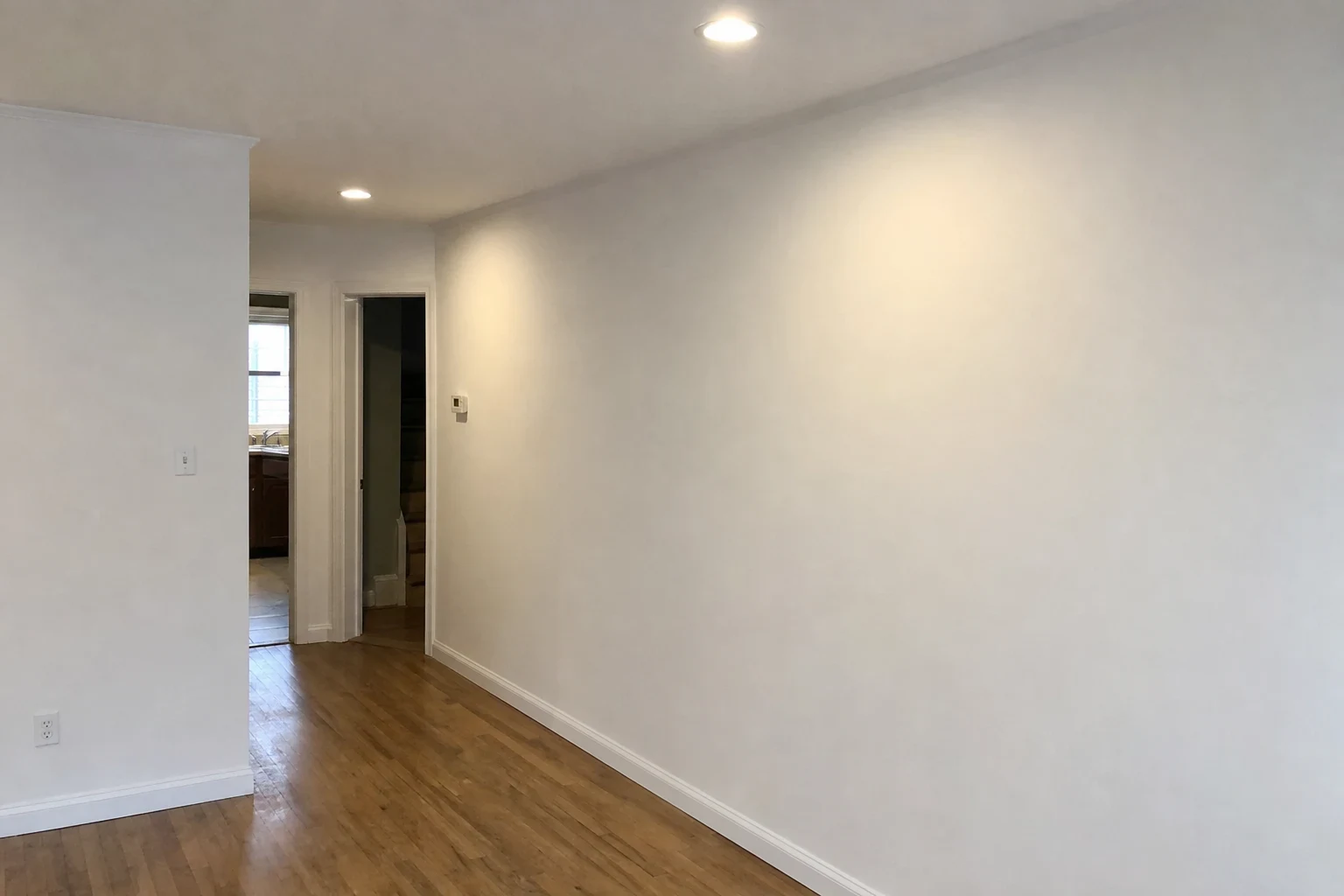
Get the Damage Fixed Without the Mess
Tell us what happened to the wall or ceiling and we will explain what the repair involves and how we will protect your home while we do it.