ServicesDrywall Hanging
Drywall Hanging in Mount Vernon
We hang new drywall on open framing for basements, additions, gut renovations and rooms where old plaster has come down. We pick the board for each room, check what is behind the studs before we fasten, and keep dust contained so the rest of your home stays livable.
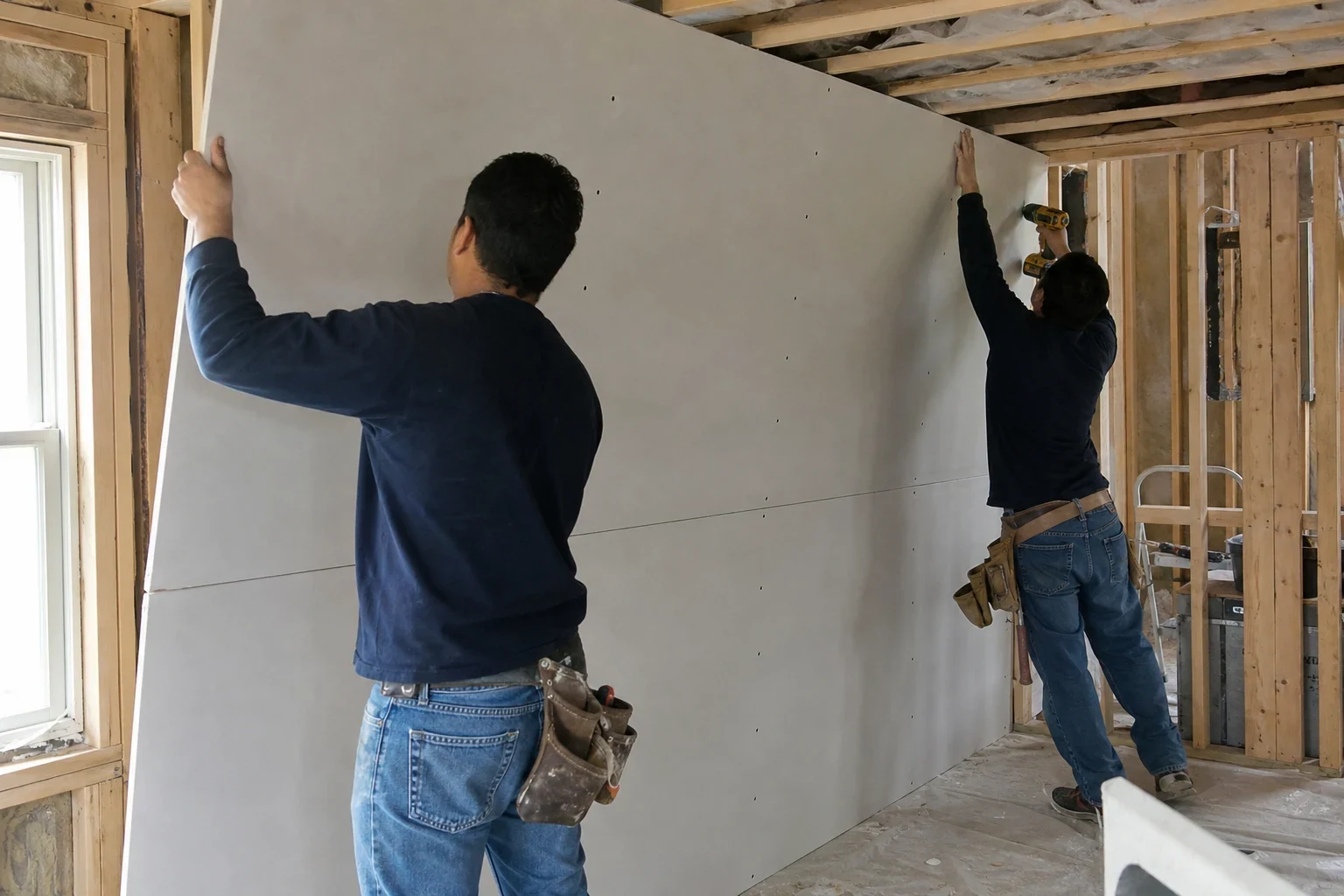
When new drywall is the right call
Hanging is the step where sheets of gypsum board go up on studs or ceiling joists and get screwed in place. It is the right job when the framing is open: a finished basement, a new partition wall, an addition, or a room stripped down after water damage or failing plaster. If only a section of an existing wall is damaged, drywall repair or drywall patching is usually the better fit.
A wall that looks fine on day one can crack along seams a year later if the board was the wrong thickness, the joints landed off a stud, or the screws were driven too deep and broke the paper face. We plan the layout before the first sheet goes up so seams fall on framing, butt joints are staggered, and long sheets cut down the number of joints that need finishing.
Safety shapes how we work in an occupied house. Many older homes around Mount Vernon have joint compounds and paints from an era when some contained asbestos or lead, so before we cut into or remove anything old we tell you what to have tested and why.
What the work includes
Board matched to the room
Standard 1/2 inch board goes on most walls. Ceilings often get 5/8 inch or sag-resistant board so it stays flat between joists. Moisture-resistant board goes in bathrooms and laundry areas, and fire-rated Type X goes where code calls for it, such as a wall between an attached garage and living space.
Checking the framing first
We look for bowed studs, missing blocking at corners and ceiling edges, and nails or screws sticking out. Board hung over a crooked stud telegraphs the bow through the finished wall, so we flag it before we fasten.
Marking wires and pipes
Before a screw goes in, we mark where electrical cable and water lines run through the framing. Screws placed near those runs are a common cause of hidden shorts and slow leaks, and that is the mistake we work to avoid.
Cutouts for boxes and fixtures
Outlet boxes, switch boxes, recessed lights and vents get cut tight to size so cover plates sit flat. Power to those circuits stays off while we cut around live boxes.
Ceiling sheets lifted, not held
Full ceiling sheets weigh more than most people expect. We raise them with a drywall lift rather than by hand overhead, which keeps the sheet tight to the joists and keeps a heavy panel from coming down on anyone.
Signs you need new drywall, not a patch
Framing is already exposed
If a renovation, a mold remediation or a water cleanup has left studs bare, new board is the next step.
Plaster pulling off the lath
Bulging or sagging plaster, especially on ceilings, means the keys holding it to the lath have broken. Patching over it does not reattach it, and a loose plaster ceiling is a falling hazard.
Wet or soft board over a wide area
Gypsum that stayed wet loses strength and can hold mold behind the paper. Once the source is fixed and the framing is dry, replacing whole sheets is safer than skim-coating.
Patches everywhere
A wall with many old repairs and uneven seams can take longer to correct than to replace, and new board gives a cleaner base for drywall finishing.
How a hanging job runs
- 1
Walkthrough by phone and in person
We talk through the rooms, the ceiling height and what the space is used for, then look at the framing and note any wiring or pipe runs, plus any older materials that should be tested first.
- 2
Protecting the rest of the house
We lay floor protection along the path from the door to the work area, seal off doorways with plastic, and cover vents so dust does not travel through the house. Children and pets should stay out of the work room while sheets are being cut and carried.
- 3
Ceilings, then walls
Ceiling board goes up first so the wall sheets support its edges. Wall sheets go on horizontally in most rooms, with screws set just below the face without tearing the paper.
- 4
Cleanup and handoff
Offcuts, screws and dust are cleaned up at the end of each day so the room is safe to walk through. The walls are then ready for taping and mud, which we cover on our Drywall Finishing page.
What moves the price
Hanging is priced from the square footage of board, but the number alone does not set the cost. Ceiling height, board type and the condition of the framing all change the labor. We walk you through each line item on the call and after we see the space.
- Room size and ceiling height
- Ceilings over standard height need scaffolding or extra lifting, and every additional row of sheets adds cuts and seams.
- Board type
- Fire-rated, moisture-resistant and sag-resistant boards cost more than standard 1/2 inch, and some rooms require them.
- Framing corrections
- Shimming bowed studs or adding blocking takes time but prevents cracked seams later.
- Access and removal
- Carrying sheets up narrow stairs or into a basement, and hauling out old material, both add time to the job.
- Testing older materials
- If old walls need to come down first, testing for asbestos or lead may be needed before demolition, which can affect the schedule.
Drywall hanging questions
Something not covered here? (914) 685-8593
Can I stay in my home while you hang drywall?
Yes, most people do. We close off the work room with plastic, cover the HVAC vents and keep a cleared walking path. Cutting and screwing are noisy, so plan for that during working hours.
Do you finish the walls too, or just hang them?
We do both. Hanging and drywall finishing are separate stages, and the taping, mud coats and sanding happen after the board is up. You can have us handle both so the seams are planned with the finish in mind.
Why not just hang over my old plaster?
Sometimes that works, but if the plaster is loose, the added weight of new board can pull the whole ceiling down. It also thickens the wall, so outlet boxes and window returns need adjustment. We check whether the plaster is still holding tight to the lath before suggesting it.
Will this need a permit?
Some projects do, such as additions or work tied to new walls or fire separations. Rules vary by municipality, so we go over what applies to your project before we start.
Do you work outside Mount Vernon?
Yes. We also hang drywall in nearby towns including Pelham, Bronxville, Yonkers, New Rochelle and Eastchester. Our Service Areas page lists the rest.
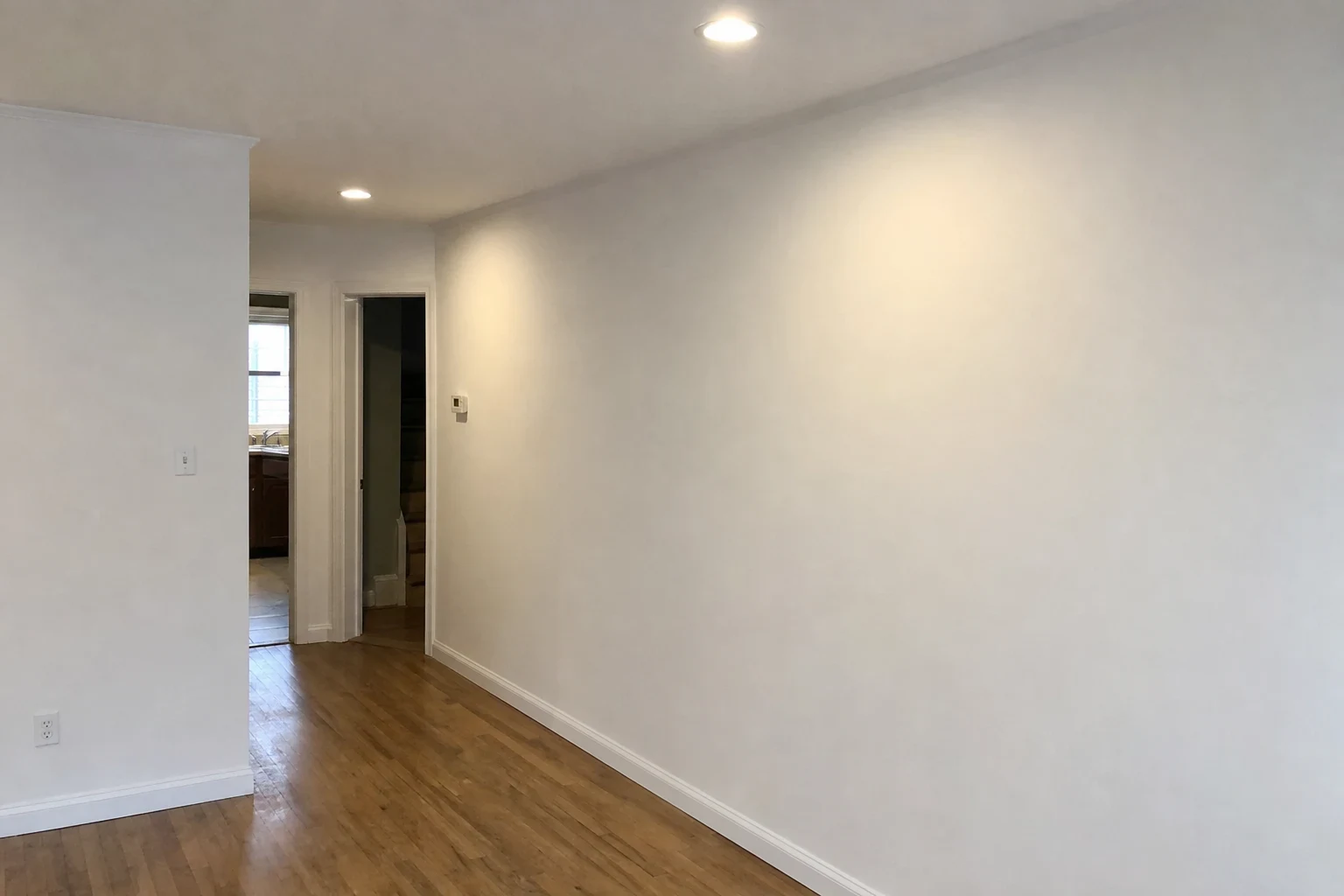
Planning a basement, addition or full room?
Tell us the room sizes and what is behind the old walls, and we will explain the board, the layout and the safety steps for your space.