About Mount Vernon Drywall Repair
We repair, hang and finish drywall inside occupied homes, so every job starts with the people and pets who live there. Before a blade touches a wall, we know what is behind it, what the old paint and compound might contain, and where the dust will go.
How we approach a wall before we open it
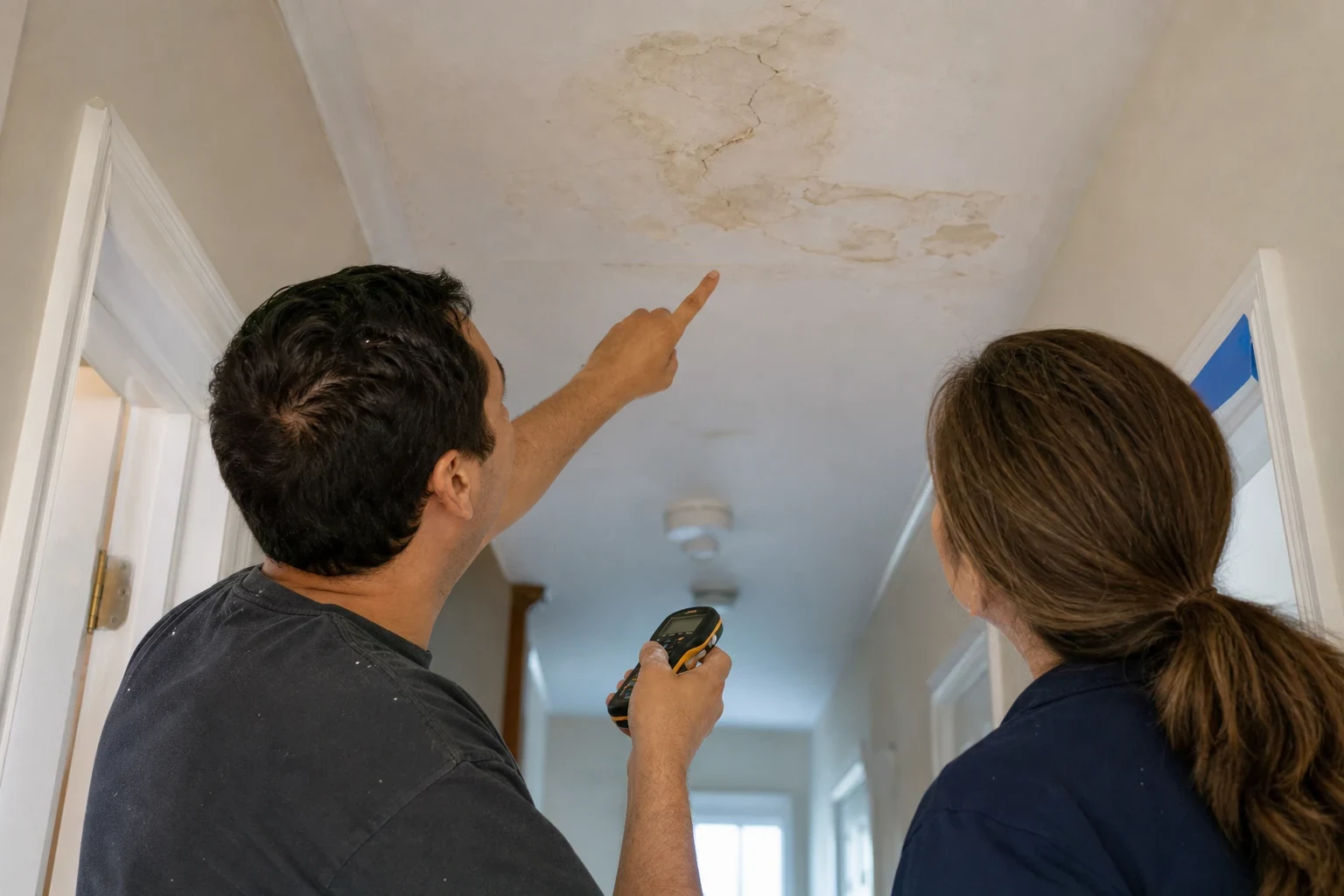
Most drywall damage has a cause: a doorknob without a stop, a slow leak above a ceiling, a nail pop from framing lumber that shrank as it dried. We find that cause first, because a patch over an active leak or loose framing will crack again. You get a plain explanation of what failed and what we plan to do about it.
Cutting into a wall is where accidents happen. Electrical cable, water lines and gas pipe run through stud bays, so we check with a stud finder and a small inspection hole before making a large cut, and we shut off the circuit when we work near outlets or switches. Many homes in the area were built well before 1978, which means old paint may contain lead and older joint compound or ceiling texture may contain asbestos. We do not dry sand those surfaces until we know what is in them.
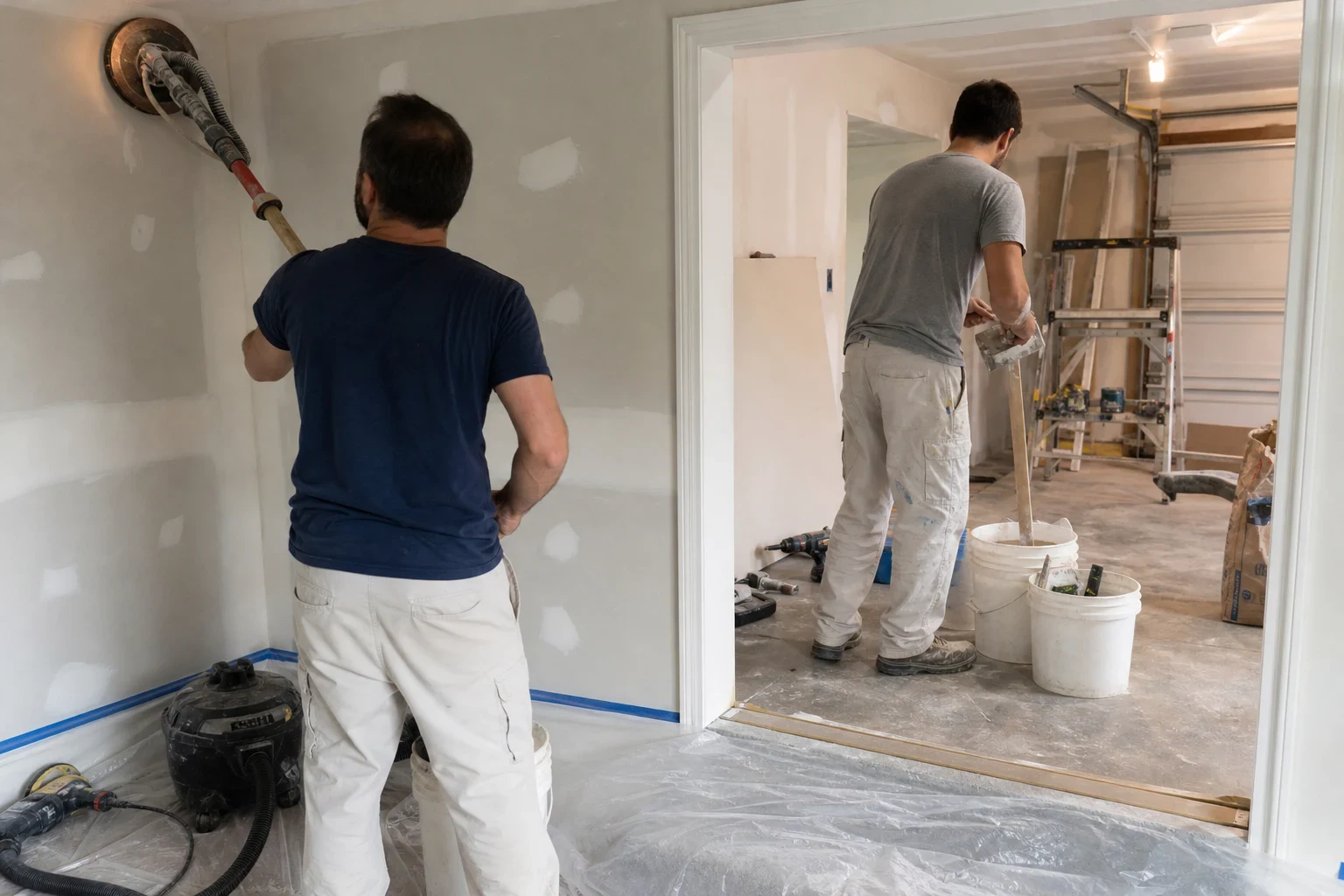
Inside the room, we set up a clean work area: plastic sheeting over the doorway, drop cloths on the floor and a HEPA vacuum attached to the sander. At the end of each day, tools, cords and buckets of compound come out of walkways, where a child or a dog could get into them. When the job is done, we wipe down surfaces and vacuum instead of just sweeping.
The practices behind every job
Dust stays in the work zone
Joint compound dust is fine enough to ride through a forced-air system and settle in every room. We cover supply and return vents, seal the doorway and use vacuum-assisted or wet sanding where it suits the finish.
Honest scope, in writing
We tell you whether the damage needs a small patch, a cut-out with new backing or a full sheet replaced, and why. You get the scope in writing before work starts, so the job does not quietly grow.
Careful overhead work
Ceiling repair means working above your head with heavy board. For full sheets we use a drywall lift and stable staging instead of muscling panels into place, which protects the crew, your floors and anyone nearby.
A repair that blends in
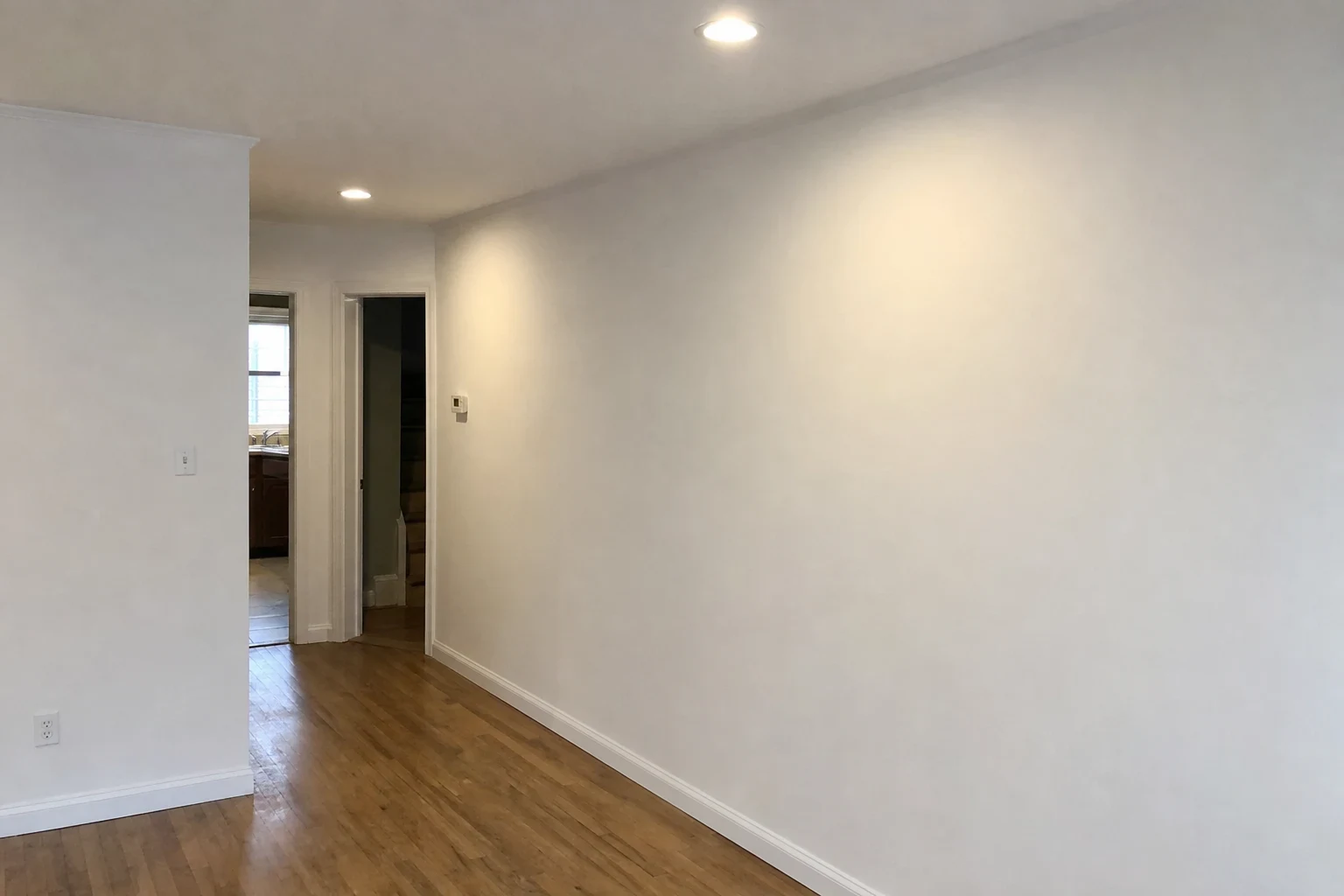
Feathered seams, careful texture matching and a primed surface ready for a paint touch-up. A patch that disappears into the wall depends on patient surface preparation and sanding between coats.
Where we work
We work in houses, rentals and multifamily buildings throughout Mount Vernon and nearby communities, including Pelham, Pelham Manor, Bronxville, Eastchester, New Rochelle, Yonkers, Mamaroneck, Greenville, Hastings-on-Hudson and parts of the Bronx. Landlords and property managers can plan work around tenants, and we coordinate access so an occupied unit stays safe and usable while the repair is underway.
- Mount Vernon
- Pelham
- Bronxville
- Pelham Manor
- Bronx
- Yonkers
- New Rochelle
- Eastchester
- Mamaroneck
- Greenville
- Hastings-on-Hudson
Tell us what happened to the wall
Describe the damage, the room and anything you know about the cause. We will ask about the age of the home and what might be behind the wall, then talk through the safest way to fix it.